

Cervicalgia or Neck Pain – Symptoms, Causes & How to Fix It

Quick answer: Cervicalgia is the medical term for neck pain. Most of it is mechanical — from posture, long hours in one position, sleep or stress — and it responds well to the right exercise: combined neck, shoulder and shoulder-blade strengthening has the best evidence, and in office workers targeted strengthening reduced pain more than other approaches. A few signs, listed in the FAQ below, mean it should be checked by a doctor first.
Introduction
Cervicalgia might sound like a complex term, but its impact is something many can resonate with – it’s the persistent neck pain that holds you back from embracing life fully. Whether it’s turning your head without discomfort, having a peaceful night’s sleep, or simply enjoying a moment of relaxation, cervicalgia seems to make its presence felt. In this article, we dive deep into the intricacies of cervicalgia, highlighting its root causes, many of which are linked to our daily habits and postures. Our aim is to arm you with essential knowledge, empowering you to break free from this pain by addressing its origins. Together, we can navigate the path to sustainable relief and reclaim the quality of life you deserve.
What is Cervicalgia?
Cervicalgia stands as a distinct form of neck pain defined by two specific criteria: 1) it arises due to sudden or recurring pressure on the neck, and importantly, 2) it remains localized, not radiating to other parts of the body. This confinement of pain sets cervicalgia apart from other neck pain forms. For instance, certain neck pain types exert so much pressure on the skull that they lead to cervicogenic headaches. Others, like the discomfort from a pinched nerve, can travel down the back and even to the arms. However, cervicalgia stays rooted in one spot, making its identification and differentiation crucial for tailored treatment approaches.
What are the Symptoms of Cervicalgia?
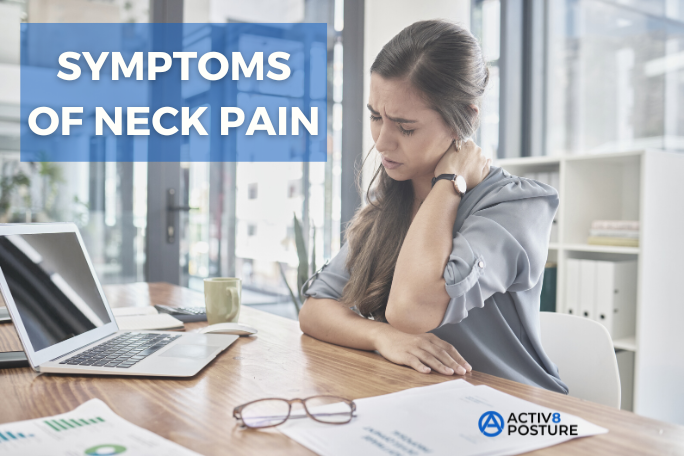
Those experiencing cervicalgia may report a range of symptoms, including:
- Stiff neck, often worsening after prolonged periods in a single position
- Sharp pain localized in the neck region
- Muscle spasms or tension in the upper back and neck muscles
- Restricted range of motion
Recognizing these symptoms early can significantly impact the success of interventions.
What Causes Cervicalgia?
The common cause of cervicalgia, while sometimes elusive in its origins, is often related to several common factors:
- Muscle strains or ligament sprains: These can arise from sudden movements, lifting heavy objects improperly, or even from sleeping in an awkward position.
- Herniated discs: When the discs between our cervical vertebrae become herniated or bulge out, they can press onto the spinal nerves, leading to pain.
- Whiplash: Often a result of car accidents, sports injuries, or unexpected falls, whiplash is a sudden jerking motion of the head, which can lead to intense neck pain.
- Degenerative conditions: This includes diseases like degenerative disc disease, osteoporosis, and osteoarthritis, where the natural wear and tear or degeneration of spinal components leads to pain.

How Our Modern Lifestyles and Poor Posture Cause Neck Pain
The rapid evolution of technology has transformed the way we work, play, and communicate. However, our postural habits haven’t necessarily evolved for the better. Extended periods of sitting, consistent use of gadgets, and a sedentary lifestyle can be detrimental to our posture and health.
- The Postural Chain Reaction: Poor postural alignment, especially in the lower back and pelvis, can set off a chain reaction. Misalignments in these areas can travel up the spinal column, culminating in neck pain, headaches, shoulder pain, and many more symptoms. It’s a testament to the elaborate interconnectedness of our body.
- The Bigger Picture: Disc and joint changes in the neck are very common with age — they show up in most people over 65, including many with no pain at all. So a scan finding isn’t the whole story: how the neck is loaded and moved day to day often matters more, and that part is trainable.
- The Weight of Imbalance: When the head drifts forward of the shoulders, the muscles at the back of the neck and upper back have to work harder to hold it up, and they work that way all day. That extra, uneven effort is a common part of the picture in the causes of neck pain.
By understanding the intricate role posture plays in our risk factors of overall spinal health, we pave the way for more holistic and long-term solutions to cervicalgia and its underlying causes.
The Posture Paradigm: Common Causes of Neck Pain

Poor posture isn’t just about a slouched back or uneven shoulders; it can manifest in various ways, contributing to discomfort and long-term complications if not addressed. Over time, these postures can strain muscles, ligaments, and even the cervical spine itself. Here’s a rundown of some commonly observed postural issues that might be contributing to your neck pain:
- Tech Neck: This is prevalent in our digital age, where people bend their necks to look down at devices for extended periods. The increased forward angle places excessive stress on the neck muscles and cervical spine.
- Forward Head Posture: Often due to prolonged sitting and poor ergonomic setups, this posture sees the head leaning forward, away from its neutral position, leading to increased strain on the neck muscles.
- Rounded Shoulders: Common with desk jobs and excessive smartphone use, the shoulders move forward, leading to an imbalance in muscle use and placing extra tension on the neck.
- Hyperextended Neck: Some people (commonly those with kyphosis) push their heads forward unconsciously, especially when focusing. This excessive extension places undue stress on the vertebrae in the neck.
- Hunched Back: A rounded upper back, or thoracic kyphosis, changes the neck’s natural curvature, leading to strain and pain over time.
- Uneven Shoulders: Whether due to muscle imbalances, scoliosis, or frequent use of one side more than the other, uneven shoulders can tilt the neck, causing strain and discomfort.
Recognizing these postures in yourself is the first step toward correction. By being mindful of your alignment and making necessary adjustments, you are paving the way toward a healthier, more comfortable neck.
How Neck Pain Is Usually Treated, and What Helps Most
Most people start with over-the-counter pain relievers, heat or ice, or a course of physical therapy, and these have a place: they can calm a flare-up and help break the pain-spasm cycle. The best-evidenced long-term piece is exercise. A Cochrane review of 27 trials found that combined neck, shoulder and shoulder-blade strengthening helped pain and function, while stretching alone or general fitness alone did less. In office workers with neck pain, targeted neck and shoulder strengthening reduced pain more than the other approaches studied.
When neck pain keeps coming back, it’s often because what’s feeding it hasn’t changed — a rounded upper back, shoulders that hike or roll forward, or long hours in one position.
Posture: The Whole-Body View of Neck Pain

The neck sits on top of everything else. A rounded upper back, shoulders that round or hike, or a pelvis that tips can all change how much work the neck muscles do to hold your head up — and neck pain and low back pain often travel together. With whole-body postural therapy, you learn how you move, sit, stand and sleep, and Activ8 Posture’s holistic approach builds strength and mobility from the feet up, so the neck isn’t doing someone else’s job.
Prevention: Protecting Your Neck Health
- Set up an ergonomic workspace, with your screen at eye level so your head isn’t reaching forward.
- Take short movement breaks through the day — roll your shoulders, turn your head, stand up and walk.
- Keep up strength work for the upper back and shoulder blades, not just stretching.
- Give sleep the attention it deserves; poor sleep is one of the strongest predictors of new musculoskeletal pain.
Posture Check: Could Your Poor Posture Be Behind Your Neck Pain?

Your overall posture tells a story that’s written all the way up to your neck. By conducting a simple posture check, you can gain insight into potential misalignments that can be contributing causes of neck pain. Here are three posture tests to help you uncover if your body’s alignment might be the culprit:
- Mirror Assessment: Begin by standing in front of a full-length mirror. Assess the evenness of your shoulders. Is one higher than the other? Next, observe your head. Does it tilt to one side, or does it lean forward? These could be tell-tale signs of postural imbalances that factor into your neck pain.
- Wall Test: Stand with your back against a wall, removing your shoes for this test. Ensure that your heels, buttocks, and the back of your head are touching the wall. Slide a hand behind your lower back. If there’s a large gap, it indicates an exaggerated lumbar curve. Similarly, try the same at your neck. Excessive space here might suggest forward head posture – both potential contributors to cervicalgia.
- Balance Test: Close your eyes and stand with your feet hip-width apart. Do you feel more weight on one foot than the other? Or perhaps on the balls of your feet rather than the heels? Imbalances in weight distribution can give clues about misalignments in your lower body, which can work their way up, culminating in neck strain.
Awareness is the first step towards correcting posture-related issues. And if you’re seeking expert insight, scheduling a free posture assessment with one of our posture therapists at Activ8 Posture can offer more insights into your body’s alignment and potential solutions.
Frequently Asked Questions
What does cervicalgia mean in medical terms?
Cervicalgia refers to pain experienced in the neck and shoulder region. This pain can fluctuate in intensity, sometimes feeling like a dull ache and at other times resembling an electric shock radiating from the neck down to the arm. While cervicalgia can sometimes be linked to specific underlying diseases, it often arises from everyday activities and habits. Common non-disease-related causes include prolonged straining of the neck (such as consistently looking up or down), sleeping in a position that puts undue stress on the neck, experiencing high stress levels, or even wearing heavy necklaces.
How do you fix cervicalgia?
Treatment options vary based on the cause. From symptom-based treatments like pain relievers and physical therapy to holistic solutions such as postural therapy and acupuncture, a tailored approach is best. Always consult with a healthcare professional, getting more than one opinion as necessary.
Is cervicalgia serious?
Persistent or severe pain should always be evaluated. While cervicalgia describes neck pain without a direct cause, it could be symptomatic of underlying serious conditions such as nerve root impingement (radiculopathy), cervical stenosis, or meningitis. Most neck pain is mechanical and settles with the right movement and strengthening, but see a doctor promptly if it follows a fall or accident, comes with fever and a stiff neck, brings numbness, tingling or weakness in the arms, clumsy hands or changes in balance or bladder control, feels like a sudden tearing pain, or comes with unexplained weight loss or pain at night that rest doesn’t ease.
Is cervicalgia a pinched nerve?
Not always. Cervicalgia is a broad term, and while a pinched nerve can cause neck pain, they aren’t synonymous.
Is cervicalgia a disability?
Alone, it isn’t classified as a disability. However, if associated with severe conditions or significant mobility issues, it might be.
Sources
- Gross A, et al. Exercises for mechanical neck disorders. Cochrane Database of Systematic Reviews — 27 trials, 2,485 participants.
- Chen X, Coombes BK, Sjøgaard G, Jun D, O’Leary S, Johnston V. Workplace-based interventions for neck pain in office workers: systematic review and meta-analysis. Phys Ther 2018;98(1):40–62. doi:10.1093/ptj/pzx101
Where to go next
- Browse Pain & Conditions for more on this topic.
- Read how we treat chronic pain.
- Not sure where to start? A free 30-minute consultation and posture assessment, at one of our clinics or virtually, is the best first step.


