
Pronation
Quick answer: Pronation is the natural inward roll of the foot and flattening of the arch as your weight moves through each step. It’s a normal, healthy movement that helps your foot absorb shock. Overpronation is when the foot rolls in more, or stays rolled in longer, than it needs to. It often travels with flat feet and knees that drift inward, and it usually reflects how the whole leg is working, not just the foot.
Maybe a running store told you you’re an “overpronator” and sold you stability shoes. Maybe your shoes wear down on the inside edge, your arches look flat when you stand, or your feet, shins or knees ache after long days on your feet. It’s worth knowing what pronation actually is before deciding what to do about it.
What Is Pronation?
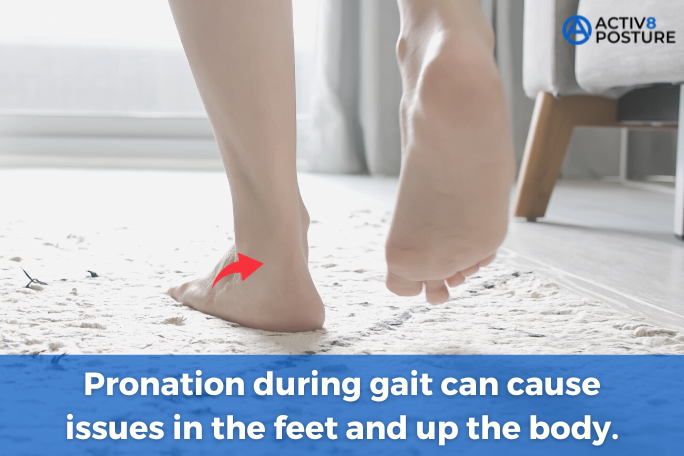
As your heel lands and your weight rolls forward, your foot naturally rolls inward slightly, your arch lowers, and your ankle tips in a little. That’s pronation. It turns your foot into a flexible shock absorber. Then, as you push off, the foot rolls back out (supination) and stiffens into a lever to propel you forward. Both movements are normal, and you need both.
Pronation vs. Overpronation vs. Supination
- Pronation: the normal inward roll as the foot takes weight.
- Overpronation: the foot rolls in too far or stays rolled in, so the arch collapses and the ankle tips inward.
- Supination (underpronation): the foot stays rolled out, putting more weight on its outer edge and absorbing less shock.

In standing, “pronated feet” usually means flat, rolled-in arches. See our guide to flat feet.
How Can I Tell If I Overpronate?
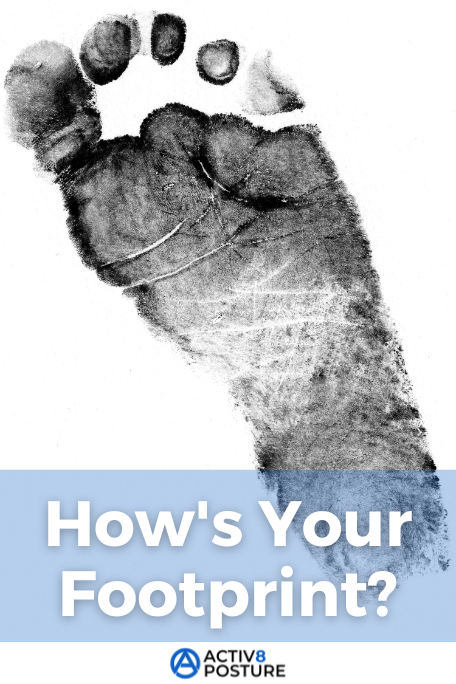
- Footprint test. Wet your feet and stand on a paper towel or dry concrete. A footprint with little or no curve on the inside, showing most of the sole, suggests low arches that roll in.
- Shoe check. Look at a well-worn pair. Heavier wear on the inside edge of the sole, or shoes that lean inward when placed on a table, are common clues.
- Ankle check. Stand barefoot and have someone look at your ankles from behind. Do they tip inward, with the heel angled out?
- Knee check. Do a slow shallow squat in front of a mirror. Do your arches collapse and your knees drift inward as you bend?
What Causes Overpronation?
- Hips and knees. When the thigh rotates inward, the knee drifts in (knock knees) and the foot rolls in beneath it. In our experience, the foot is often following the hip rather than leading.
- Foot and ankle muscles. Muscles that support the arch and steer the ankle may not be doing their share, and a stiff ankle can make the foot roll in to compensate.
- Foot structure. Some people have naturally flexible or low arches, or flat feet from childhood.
- Pelvis position. An anterior pelvic tilt or one hip sitting higher can change how each leg loads, so one foot often rolls in more than the other.
- Footwear and habits. Long hours in unsupportive shoes, or on hard floors, and sudden jumps in walking or running distance.
What Are the Symptoms of Overpronation?
Many people who pronate a lot have no symptoms at all. When there are symptoms, people commonly describe:
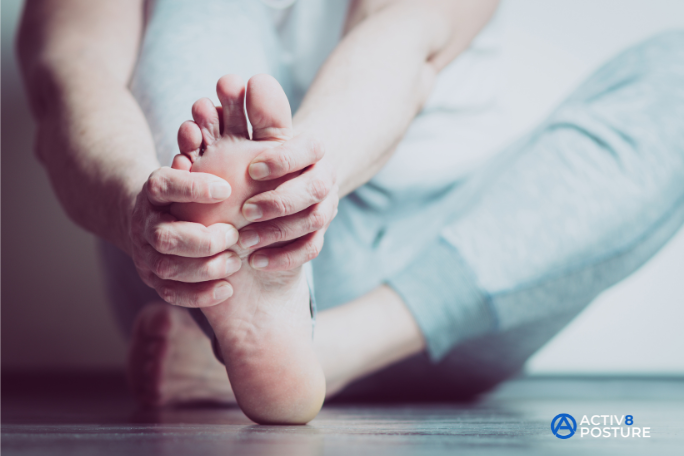
- Arch or heel discomfort, including plantar fasciitis
- Aching along the inside of the shin
- Knee discomfort, especially around the kneecap
- Feet that tire quickly or feel achy after standing
- Shoes that wear unevenly
The research is more reassuring than many people expect. In a year-long study of 927 new runners all wearing neutral shoes, those with pronated feet were not at higher risk of injury than those with neutral feet. Pronation is one piece of the picture, not a guarantee of problems.
How Do You Fix Overpronation?
Most people start with shoes or inserts, and they can help. They make the foot more comfortable and can take load off sore spots. But if the arch keeps collapsing the moment you take them off, that’s a sign the support is doing the work your body isn’t.
What tends to help alongside good footwear is working on the whole leg: getting the hips to steer the thighs, improving how the ankle moves, and waking up the muscles that support the arch. How much your feet change varies from person to person, and naturally flat or structurally low arches won’t change shape.
Exercises for Overpronation
Three starting points that work from the hips down to the feet. Move slowly and stop anything that causes pain.
1. Foot Circles and Point Flexes
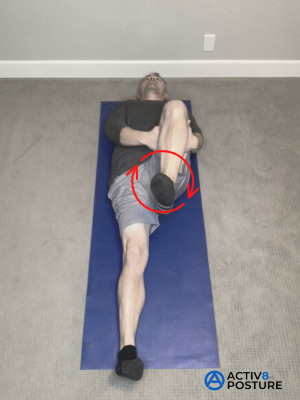
Lie on your back with one leg straight on the floor. Bring the other knee toward your chest and hold behind the thigh with both hands. Keeping the knee still, circle that foot 20 times in each direction, then point and flex it 20 times. Switch legs. Keep the foot pointing straight up toward the ceiling as you move.
2. Abduction-Adduction
Lie on your back with your hips and knees bent to 90 degrees and your feet on a wall, a few inches apart. Slowly let your knees open apart as your feet roll onto their outer edges, going only as far as is comfortable. Then slowly bring your knees back together and press them gently at the top. Keep your belly relaxed and breathe easily. Repeat 15 to 20 times.

3. Standing Glute Contractions
Stand tall with your heels a few inches apart and your toes turned out, near a wall or counter for balance if you need it. Keeping your knees straight and your upper body relaxed, squeeze your glutes firmly, then release. Repeat 20 times. Then place your feet hip-width apart and pointing straight ahead, and do 20 more. Notice how your arches lift as your glutes turn on.


For more on the hips and knees, see our knock knees and duck feet guides.
Choosing Your Next Step
There’s no single right path. It depends on how you like to work:
- You’d like to start on your own. The checks and exercises above are a sensible place to begin.
- You’d like someone to find what’s driving it. A free 30-minute consultation includes a postural assessment of how you stand and walk. We have clinics in Newton, Gloucester, Santa Monica, Beverly Grove and Middletown, RI.
- You’re not near a clinic. Virtual posture therapy brings the same assessment approach to you.
Frequently Asked Questions About Pronation
Is pronation bad?
No. Pronation is a normal part of every step, and your foot needs it to absorb shock. It’s only worth looking into when the foot rolls in a lot, stays rolled in, or comes with discomfort.
Do I need special shoes if I overpronate?
Not necessarily. For many people, comfort is a better guide than foot type. Supportive shoes or orthotics can make feet more comfortable, especially if you’re sore, but they don’t retrain the hips and legs. If a podiatrist or doctor has prescribed orthotics, keep using them unless they advise otherwise.
Are overpronation and flat feet the same?
They’re closely linked. Flat feet describes the arch shape when standing; overpronation describes the foot rolling in as you move. Most people with flexible flat feet overpronate. See our guide to flat feet.
Can overpronation cause knee pain?
It can contribute. When the foot rolls in, the shin rotates inward and the knee often drifts inward too, which can load the knee unevenly. But the knee, hip and foot all influence each other, so it’s worth looking at the whole leg.
This article is general education, not medical advice. If you have persistent foot, heel, shin or knee pain, swelling, numbness, or pain after an injury, see a physician or podiatrist first. Posture therapy works alongside medical care, never instead of it.
Where to go next
- Browse the Posture Dictionary for related terms.
- Not sure where to start? A free 30-minute consultation and posture assessment, at one of our clinics or virtually, is the best first step.