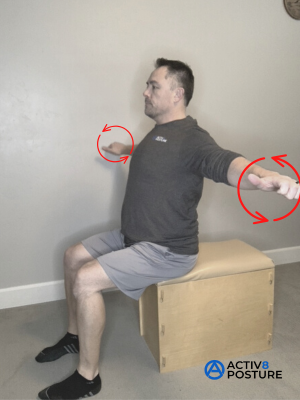
Winged Scapula

A winged scapula is a shoulder blade that lifts away from the ribcage instead of lying flat against it, usually because the muscles that should hold it down are not doing their share of the work.

Winged Scapula: A Guide to Understanding and Correcting This Common Postural Syndrome

Are you noticing an unusual protrusion on your upper back near your shoulder blade? Does your back look uneven when you do push-ups or press against a wall? You might be dealing with a winged scapula – a common postural issue that can cause more problems than most people realize.

We’ve worked with hundreds of clients with this exact condition, and here’s what you need to know: a winged scapula isn’t just a cosmetic concern. It can lead to shoulder pain, limited movement, and even affect your overall posture and well-being.

The good news? This condition is often completely correctable with the right approach. Let’s dive into what’s really happening with your shoulder blade, why it matters, and, most importantly, how to fix it.

serratus anterior prevents scapular winging

What is a Winged Scapula?

Simply put, a winged scapula occurs when your shoulder blade (scapula) sticks out from your back instead of lying flat against your ribcage where it belongs.

Think of your scapula as a key foundation piece for your shoulder and arm movements. When working properly, it should glide smoothly across your back as you move your arm. But when it “wings out,” this natural movement gets disrupted.

You might notice it most when:

  • Pushing against a wall
  • Doing push-ups
  • Reaching forward
  • Lifting objects overhead

If you’ve ever caught a glimpse of your back in the mirror during these movements and noticed one or both shoulder blades poking out, that’s the “winging” we’re talking about.

How to Spot a Winged Scapula

Not sure if this applies to you? Here’s what to look for:

  • The inner edge of your shoulder blade visibly sticks out from your back
  • Your shoulder blade might appear to sit farther away from your spine than normal
  • The protrusion becomes more obvious when pushing against resistance
  • When viewed from the side, your shoulder may appear to be positioned forward
  • There may be a noticeable difference between your left and right shoulder blades

The severity can range from barely noticeable to quite pronounced. Some people only see winging during certain movements, while others experience visible protrusion even at rest.

Common Symptoms of Winged Scapula

Living with a winged scapula often means dealing with more than just the visual asymmetry. You might be experiencing:

Pain and Discomfort

  • Aching between your shoulder blades
  • Sharp pain when performing pushing movements
  • Discomfort after long periods of computer work
  • Shoulder pain that seems to come and go
  • Neck tension that won’t resolve with typical stretching

Functional Limitations

  • Difficulty raising your arm overhead without compensation
  • Reduced shoulder strength, especially in pushing exercises
  • Quick fatigue when holding your arms up (like when styling hair or painting)
  • Limited ability to carry heavy objects
  • Challenges with activities requiring shoulder stability (like planks or push-ups)

Related Issues

  • Persistent neck tension and headaches
  • Upper back stiffness
  • Shoulder clicking or popping sensations
  • Tingling or numbness in the arm or hand (in some cases)
  • Feeling like your shoulder is “unstable” during movements

Many people live with these symptoms for years without realizing they’re connected to scapular winging. They try massage, stretching, and various treatments that might provide temporary relief but never address the root cause.

If several of these symptoms sound familiar, there’s a good chance scapular winging is contributing to your discomfort.

Types of Scapular Winging

Not all winged scapulae are the same. Understanding the specific type you’re dealing with is crucial for effective treatment:

Medial Winging

This is the most common type, where the inner border of your scapula protrudes. If you can slide your fingers under the inner edge of your shoulder blade, you’re likely experiencing medial winging. This typically indicates weakness in your serratus anterior muscle – often called your “boxing muscle” because it’s responsible for pushing movements.

Lateral Winging

Less common but still important, lateral winging shows up as the outer border protruding. This usually points to weakness in your rhomboids or trapezius muscles, which help pull your shoulder blade toward your spine.

Superior Winging

When the top of your shoulder blade sticks up, you’re experiencing superior winging. This often comes from overactive upper trap muscles combined with weakness in your lower traps – a common pattern in people who carry a lot of stress in their shoulders.

Inferior Winging

In this type, the bottom corner of your scapula protrudes. This typically involves weakness in both your lower trapezius and serratus anterior muscles.

Most people I work with are surprised to learn there are different types of winging. Knowing which one you have is the first step toward targeted correction.

What’s Really Going On: The Anatomy Behind Winged Scapula

winged scapula anatomy

To truly understand what’s happening, let’s talk about the key players in this postural pattern:

The Muscle Imbalance Story

Your scapula is controlled by several muscles that should work together in harmony:

  • Serratus Anterior: This is your primary stabilizer that keeps your scapula flat against your ribcage. When it’s weak or not firing properly, the inner border of your scapula wings out. Think of it as the “anti-winging” muscle.
  • Trapezius: This large, diamond-shaped muscle has three parts (upper, middle, and lower). The middle and lower portions help hold your scapula in the proper position. When they’re weak, other muscles take over in ways that promote winging.
  • Rhomboids: These muscles connect your scapula to your spine. They’re responsible for pulling your shoulder blade toward your spine. Weakness here contributes to scapular instability.
  • Pectoralis Minor: When this chest muscle gets tight, it pulls your scapula forward and down, creating an imbalance that promotes winging.

The issue isn’t usually just one muscle being weak – it’s an entire pattern of some muscles becoming overactive while others become inhibited.

The Nerve Connection

Sometimes winging has a neurological component:

  • Long Thoracic Nerve: This nerve controls your serratus anterior. If it’s damaged or compressed, your serratus can’t function properly, no matter how much you try to strengthen it.
  • Spinal Accessory Nerve: This controls your trapezius. Damage here affects your ability to stabilize your scapula from the back.
  • Dorsal Scapular Nerve: This nerve supplies your rhomboids. Issues here can contribute to certain types of winging.

While most cases of winging are related to muscle imbalances that can be corrected with proper exercise, persistent or sudden winging might indicate a nerve issue that requires medical attention.

Why Your Winged Scapula Happened: Common Causes

Wondering how you developed this condition? Here are the most common culprits I see in my practice:

1. Modern Lifestyle Factors

  • Hours at the Computer: The forward-reaching position at a keyboard promotes tightness in the chest and weakness in the mid-back muscles.
  • Smartphone Neck: Constantly looking down at devices creates a chain reaction that affects shoulder blade positioning.
  • Sedentary Habits: Lack of varied movement leads to certain muscles becoming chronically weak.
  • Poor Sleeping Positions: Consistently sleeping with your arm under your pillow or in positions that round your shoulders can contribute over time.

2. Exercise Patterns

  • Unbalanced Workouts: Too much pushing (bench press, push-ups) without enough pulling exercises.
  • Improper Technique: Especially in exercises like push-ups, planks, or overhead presses.
  • Overlooking Scapular Muscles: Many workout routines neglect the specific muscles that control the scapula.

3. Previous Injuries

  • Shoulder Trauma: Even minor injuries can create compensation patterns that lead to winging.
  • Neck Injuries: These can affect the nerves that control your scapular muscles.
  • Surgery: Particularly procedures in the chest, shoulder, or neck region that might affect muscles or nerves.

4. Neurological Factors

  • Nerve Compression: From poor posture, repetitive movements, or carrying heavy bags.
  • Nerve Injury: From trauma or certain medical conditions.

The Whole-Body Impact: Why Your Winged Scapula Affects More Than Just Your Shoulder

One of the biggest misconceptions about winged scapula is that it’s an isolated shoulder problem. In reality, it’s connected to your entire body’s function in ways you might not expect.

The Upper Body Chain Reaction

When your scapula isn’t positioned properly:

  • Your shoulder joint loses its stable base, potentially leading to impingement, rotator cuff issues, and chronic shoulder pain.
  • Your neck compensates for the shoulder instability, often leading to tight upper trapezius muscles, neck strain, and even tension headaches.
  • Your thoracic spine (mid-back) can become less mobile, affecting your ability to rotate and extend properly.
  • Your breathing may be affected, as the muscles around your ribcage cannot function optimally.

The Surprising Lower Body Connections

Following the principles of regional interdependence (a fancy way of saying “everything’s connected”):

  • Your core stability changes in response to upper body dysfunction.
  • Your hip and pelvic positioning can shift to compensate for upper body imbalances.
  • Your walking and running mechanics might alter slightly, potentially creating stress in unexpected areas like your knees or lower back.

This is why people with chronic shoulder blade issues often experience seemingly unrelated problems throughout their body. It’s also why addressing winged scapula properly can sometimes resolve issues you never realized were connected.

How Professionals Assess Winged Scapula

When you visit a posture specialist like those at Activ8 Posture, here’s how we evaluate your specific situation:

Visual Assessment

We look at your scapular positioning both at rest and during movement from multiple angles, noting any asymmetries or abnormal positioning.

Movement Testing

We’ll have you perform specific movements like:

  • The Wall Push Test: standing facing away from a wall and pushing against it to reveal winging
  • Arm raising in different planes
  • Scapular control exercises to assess your ability to position and hold your shoulder blade properly

Muscle Testing

We check for:

  • Serratus anterior strength and activation
  • Lower trapezius strength
  • Rhomboid engagement
  • Pectoralis minor and major tightness
  • Other related muscle imbalances

Functional Movement Patterns

Using frameworks like the Functional Movement Screen (FMS), we assess how your scapular function affects whole-body movements, looking at:

  • Shoulder mobility in multiple directions
  • Core stability during arm movements
  • Push-up mechanics
  • Rotational movements that require scapular stability

This comprehensive approach helps us identify not just that you have winging, but exactly why it’s happening in your specific body – crucial information for effective correction.

The Janda Approach to Understanding Winged Scapula

Vladimir Janda’s approach to musculoskeletal dysfunction provides valuable insights into winged scapula. His concept of Upper Cross Syndrome often coincides with scapular winging and involves:

  • Tight/Facilitated Muscles: Upper trapezius, levator scapulae, pectoralis major and minor
  • Weak/Inhibited Muscles: Deep neck flexors, middle and lower trapezius, serratus anterior

This imbalance creates a predictable pattern of movement dysfunction that must be addressed comprehensively rather than treating isolated symptoms.

Your Roadmap to Fixing Winged Scapula

The good news is that most cases of winged scapula can be successfully addressed with a systematic approach. Here’s what works:

Step 1: Release Tight Tissues

Before you can strengthen weak muscles, you need to address the tight ones that are pulling your scapula out of position:

  • Self-Release Techniques:
    • Foam rolling your chest, upper back, and lats
    • Using a tennis or lacrosse ball on tight spots in your chest (especially the pectoralis minor)
    • Gentle thoracic spine mobilizations over a foam roller
  • Key Stretches:
    • Doorway chest stretches at different angles
    • Latissimus dorsi stretches
    • Upper trapezius and levator scapulae stretches if you’re dealing with tension in your upper shoulders

Step 2: Activate the Right Muscles

Next, we need to wake up those underactive muscles:

  • Serratus Anterior Activation:
    • Wall slides with attention to keeping your scapula flat against your ribs
    • Supine punches (lying on your back and “punching” toward the ceiling)
    • Scapular protraction exercises (pushing your shoulder blade forward around your ribcage)
  • Lower Trapezius Awakening:
    • Prone Y raises (lying on your stomach with arms in a Y position)
    • Prone T raises with thumbs up
    • Band pull-aparts with focus on pulling your shoulders down and back

Step 3: Build Strength and Control

Once you’ve got the right muscles activating, it’s time to strengthen them:

  • Progressive Loading:
    • Push-up plus exercises (regular push-ups with an emphasis on pushing your upper back toward the ceiling at the top)
    • Serratus punches with resistance bands
    • Wall push-ups with focus on scapular control
  • Integrated Exercises:
    • Bear crawls and other quadruped movements
    • Turkish get-ups (a complex exercise that requires scapular stability throughout)
    • Farmer’s carries (walking while holding weights with good posture)

Step 4: Integrate into Daily Life

The final and most important step is making your new scapular control automatic:

  • Posture Awareness: Setting up reminders to check your shoulder position throughout the day
  • Ergonomic Adjustments: Making sure your workspace promotes good scapular positioning
  • Movement Habits: Incorporating scapular-friendly movements throughout your day

This step-by-step approach is the foundation of our posture alignment therapy at Activ8 Posture. We’ve found it consistently leads to lasting results because it addresses both the symptoms and the underlying causes of winged scapula.

Why Many Correction Attempts Fail (And How to Ensure Yours Doesn’t)

Over the years, I’ve seen many people try to address their winged scapula without success. Here’s what usually goes wrong:

Common Mistakes:

  1. Focusing only on strengthening without addressing tissue restrictions When tight muscles are pulling your scapula out of position, no amount of strengthening the opposing muscles will fully solve the problem.
  2. Generic exercises without proper activation Doing exercises like rows and push-ups without ensuring the right muscles are actually engaging can reinforce poor patterns.
  3. Isolated approaches that ignore the whole-body connection Treating the scapula as a separate entity rather than part of an integrated system limits results.
  4. Inconsistent practice Sporadic efforts without progressive loading rarely create lasting change in movement patterns.
  5. Attempting self-correction without proper assessment Without knowing which type of winging you have or why it’s occurring, you might be doing exercises that don’t address your specific issue.

The Activ8 Posture Difference:

Our posture alignment therapy approach avoids these pitfalls by:

  • Starting with a comprehensive assessment to identify your specific pattern
  • Addressing both tight and weak muscles in the right sequence
  • Using precise cues and feedback to ensure proper muscle activation
  • Incorporating whole-body integration exercises
  • Providing a progressive program that builds over time
  • Including strategies for incorporating proper movement into daily life

This systematic approach is why our clients consistently experience not just reduced winging, but improvements in shoulder function, neck tension, and overall posture.

Prevention Strategies

To maintain optimal scapular health and prevent winging:

  1. Balanced Strength Training: Ensure your workout program includes pulling exercises to balance pushing movements.
  2. Postural Awareness: Practice maintaining proper scapular positioning during daily activities.
  3. Ergonomic Optimization: Set up work and living spaces to support good posture.
  4. Movement Variety: Avoid repetitive movements without counterbalancing activities.
  5. Regular Assessment: Periodically check your scapular positioning and movement, especially if you engage in activities that stress the shoulders.

A Simple Starting Routine You Can Try Today

While a personalized program based on proper assessment will always yield the best results, here’s a basic routine you can start with to address the most common type of winging:

Daily Practice (10-15 minutes):

  1. Chest Opener (1 minute): Stand in a doorway with your elbow bent at 90 degrees and forearm against the doorframe. Step forward with the opposite foot and gently lean forward until you feel a stretch in your chest. Hold for 30 seconds each side.
  2. Wall Slide with Scapular Awareness (2 minutes): Stand with your back against a wall, feet slightly away. Place your arms against the wall in a “W” position. Slowly slide your arms up while keeping your forearms, wrists, and elbows in contact with the wall. Focus on keeping your shoulder blades flat against the wall as you move. 10 reps.
  3. Serratus Punch (2 minutes): Lie on your back with arms extended toward the ceiling. Reach up, pushing your shoulder blades away from the wall (think about making your arms as long as possible). Hold for 2 seconds, then return to the starting position. 15 reps.
  4. Prone Y Raise (2 minutes): Lie on your stomach with arms extended overhead in a Y position, thumbs pointing up. Gently lift your arms a few inches while keeping your neck relaxed. Focus on using your lower shoulder blade muscles rather than your upper shoulders. 12 reps.
  5. Bear Hold (1 minute): Get on all fours, then lift your knees just an inch off the ground. Focus on pushing the ground away and keeping your shoulder blades flat against your back. Hold for 15-30 seconds.

Remember, this is just a starting point. For lasting correction, a progressive program tailored to your specific type of winging and underlying causes is essential.

When to Seek Professional Help

While many cases of winged scapula respond well to proper exercise, there are situations where professional guidance is particularly important:

  • When winging appears suddenly without an obvious cause
  • If you’re experiencing significant pain or weakness along with winging
  • When the winging doesn’t improve after 4-6 weeks of consistent exercise
  • If you notice numbness or tingling in your arm along with the winging
  • When the condition is significantly affecting your daily activities or sleep

In these cases, working with a posture specialist who understands not just the isolated issue but its connection to your whole-body function can make all the difference in your recovery.

How Activ8 Posture’s Approach Can Help

At Activ8 Posture, we specialize in addressing postural issues like winged scapula through our comprehensive posture alignment therapy. Our approach is different because:

  1. We see the whole picture – understanding how your winged scapula connects to other areas of your body.
  2. We address the root causes – not just the symptoms or the isolated area of concern.
  3. We create personalized solutions – based on your specific type of winging, lifestyle factors, and goals.
  4. We provide progressive programs – that evolve as your body changes and improves.
  5. We teach self-sufficiency – giving you the tools to maintain your improvements long-term.

Our clients with winged scapula typically report not just better shoulder blade positioning, but also improvements in shoulder pain, neck tension, upper back mobility, and even breathing quality.

Your Next Steps

Ready to address your winged scapula properly? You have two great options to get started:

Option 1: Free 30-Minute Consultation and Posture Assessment

Take advantage of our complimentary assessment where we’ll:

  • Evaluate your specific type of scapular winging
  • Identify key contributing factors
  • Discuss how our posture alignment therapy could help your situation
  • Answer any questions you have about the condition and correction options

Option 2: Targeted Exercise Program for Winged Scapula

If you prefer to start addressing the issue at home, our specialized exercise program provides:

  • A progressive, step-by-step approach to correcting winged scapula
  • Video demonstrations of each exercise with precise cuing
  • Modifications for different fitness levels
  • Integration strategies for daily activities
  • Clear instructions on how to progress

Whichever option you choose, the most important thing is to take that first step. Winged scapula rarely resolves on its own, but with the right approach, it’s one of the most correctable postural issues we see.

Don’t let shoulder blade winging limit your comfort, activities, or confidence. Contact us today to start your journey toward better posture and function.

Ready to address your winged scapula? Take the first step toward improved posture and function by scheduling our free 30-minute consultation and posture assessment. Our experts will evaluate your specific situation and provide tailored recommendations to address your unique needs. Contact us today to book your appointment.

Looking for a structured approach to correcting winged scapula at home? Check out our specialized exercise routines designed specifically for scapular rehabilitation. These affordable, easy-to-follow programs provide progressive exercises that target the exact muscles needed to restore proper scapular positioning and function.

Don’t let pelvic asymmetry hold you back.

Schedule a Free 30-minute Consultation & Posture Assessment with Activ8 Posture and start your journey to improved mobility and reduced pain.

Live pain-free

Don’t let pelvic asymmetry sabotage your life.

 It’s time to take control of your health and break free from the pain. Schedule a consultation with Activ8 Posture today and discover how our specialized approach can help you achieve lasting relief and improve your overall well-being.