
Kyphoscoliosis
Quick answer: Kyphoscoliosis is a curve of the spine in two directions at once: excessive forward rounding of the upper back (kyphosis) combined with a sideways curve (scoliosis). It ranges from a mild postural combination to a structural condition that needs specialist care. In its structural form it’s diagnosed on an X-ray, and severe curves can affect breathing. Milder, postural versions, where a rounded upper back and a sideways lean combine, are more common and often reflect how the whole body is balancing.
Maybe you’ve been told you have “both kyphosis and scoliosis,” or you’ve noticed your upper back rounds forward and also seems to lean or twist to one side. It can sound like a lot at once. Breaking it into its two parts makes it much easier to understand.
What Is Kyphoscoliosis?
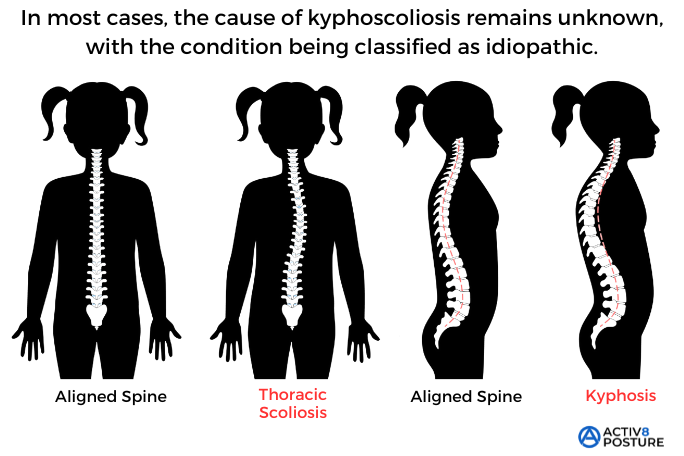
- Kyphosis: the upper back curves forward more than usual, giving a rounded or hunched look. See hunchback posture and hyperkyphosis.
- Scoliosis: the spine curves to the side, usually with some rotation. See scoliosis.
With kyphoscoliosis, both happen in the same part of the spine, so the upper back rounds forward and twists sideways at the same time.
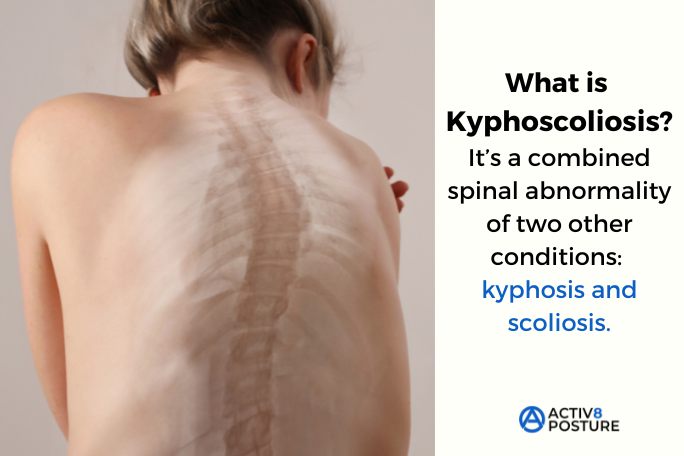
Structural vs. Postural Kyphoscoliosis
Structural kyphoscoliosis is a change in the spine itself. It can be present from birth (congenital), linked to neuromuscular conditions, develop with age as the discs and joints change, or follow bone loss or injury. It’s confirmed on an X-ray, and severe curves can restrict the rib cage enough to affect breathing, so it needs a doctor or spine specialist.
Postural kyphoscoliosis is when a rounded upper back combines with a sideways lean created by something else, such as a tilted pelvis, uneven shoulders, or one-sided habits. The spine’s structure is typical, and the pattern tends to change when you stand tall, bend forward or lie down. This is the kind posture work is best suited to.
How Can I Tell If I Might Have Kyphoscoliosis?
- Side view. Have someone photograph you from the side. Does your upper back round forward noticeably?
- Back view. From behind, do your shoulders, shoulder blades or waist look uneven?
- Forward bend check. Bend forward from the hips with your arms hanging. Does one side of your upper back sit higher, and does the rounding look sharp or angular?
- Stand-tall check. Stand as tall as you comfortably can. Does the rounding and leaning ease a lot? If it barely changes, it’s more likely structural.
Only an X-ray can confirm kyphoscoliosis and measure the curves. See a doctor if you notice these signs, especially in a child or teenager.
What Are the Symptoms of Kyphoscoliosis?
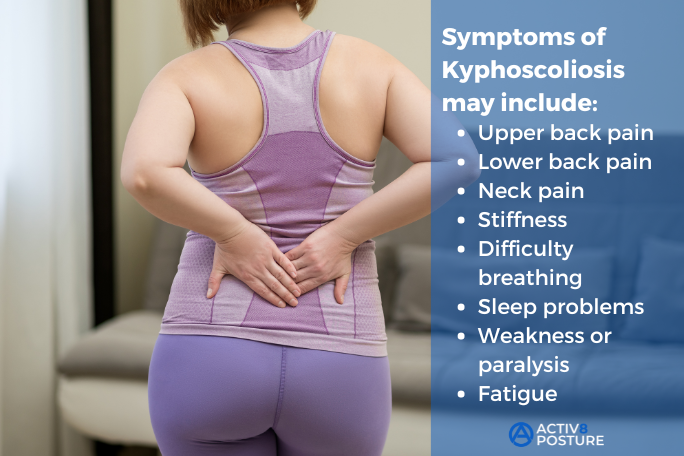
Mild kyphoscoliosis may cause no symptoms. When there are symptoms, people commonly describe:
- Upper back stiffness or aching, often more on one side
- Fatigue when standing or sitting upright for long periods
- Neck and shoulder tension
- Uneven shoulders or a rib cage that looks uneven
See a doctor promptly if you have shortness of breath, a curve that seems to be getting worse, or back pain with numbness, weakness, or changes in bladder or bowel control.
How Does Posture Therapy Help With Kyphoscoliosis?
When the spine curves in two directions, the rest of the body builds patterns around it: one shoulder works harder, the pelvis turns, the head shifts to keep your eyes level. Those patterns are often where the day-to-day stiffness and fatigue come from.
For postural kyphoscoliosis, addressing the pelvis, hips, upper back and one-sided habits that create the pattern can change it. For structural kyphoscoliosis, posture therapy doesn’t straighten the curves, but it can help you move and load your body more evenly around them, alongside your doctor’s care, including any bracing or monitoring. Because every combination of curves is different, we don’t recommend generic exercises; the right routine depends on what an assessment finds.
Choosing Your Next Step
- You haven’t been diagnosed but see the signs. Start with your doctor, who can confirm what’s going on with an X-ray.
- You’ve been diagnosed, or your curve is postural, and want help with how your body moves. A free 30-minute consultation includes a whole-body postural assessment and a conversation about your history and imaging. We have clinics in Newton, Gloucester, Santa Monica, Beverly Grove and Middletown, RI.
- You’re not near a clinic. Virtual posture therapy brings the same assessment approach to you.
Frequently Asked Questions About Kyphoscoliosis
What is the difference between kyphosis, scoliosis and kyphoscoliosis?
Kyphosis is forward rounding of the upper back. Scoliosis is a sideways curve. Kyphoscoliosis is both at once in the same part of the spine.
Is kyphoscoliosis serious?
It depends on the type and severity. Mild and postural forms are common and often manageable. Severe structural kyphoscoliosis can restrict the rib cage and affect breathing, which is why it needs specialist care.
Can kyphoscoliosis be corrected?
Postural kyphoscoliosis often changes with consistent whole-body work. Structural kyphoscoliosis doesn’t straighten with exercise; depending on the curves, doctors may recommend monitoring, bracing or surgery, and posture work can help with comfort and movement alongside that care.
Can kyphoscoliosis be prevented?
Structural forms often can’t be prevented, since many are present from birth or develop for reasons outside our control. Postural patterns can often be reduced by varying your positions, limiting long periods hunched over screens, and keeping your upper back and hips moving well.
This article is general education, not medical advice. Kyphoscoliosis should be diagnosed and monitored by a physician. See a doctor promptly if you have shortness of breath, a worsening curve, or back pain with numbness, weakness, or changes in bladder or bowel control. Posture therapy works alongside medical care, never instead of it.
Where to go next
- Browse the Posture Dictionary for related terms.
- Not sure where to start? A free 30-minute consultation and posture assessment, at one of our clinics or virtually, is the best first step.