

What Is Rib Flare? Symptoms, Causes and How to Correct It
Quick answer: Rib flare is when the lower front ribs sit lifted and angled outward, so they stick out more than the rest of your rib cage. It usually reflects how you breathe and how your pelvis and spine are organized, rather than a problem with the ribs themselves. That means it’s a pattern, and patterns can be worked with.
Maybe you spotted it in a mirror, a photo, or a yoga class: the edge of your ribs showing through a fitted top. Maybe a coach has told you to “pull your ribs down,” and you can hold it for about three seconds before they pop back out. Or maybe your back or neck has been nagging you, and someone suggested your ribs might be part of the story. Whatever brought you here, it makes sense to want to understand what you’re seeing before deciding what to do about it.
What Is Rib Flare?
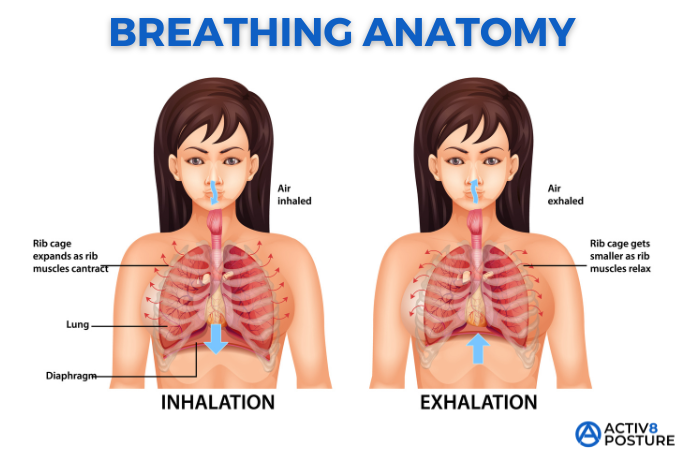
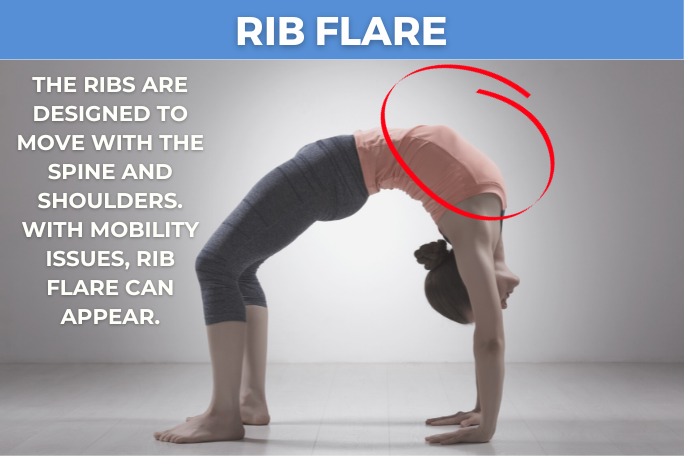
Your rib cage moves with every breath. When you breathe in, the lower ribs rise and swing outward. When you breathe out, they lower and draw back in. With rib flare, the lower ribs tend to stay parked in that breath-in position. From the side, the bottom of the rib cage points forward instead of down. From the front, the angle where the lower ribs meet under the breastbone (the infrasternal angle) often looks wider.

Rib flare can show up on one side or both. You’ll also hear it called flared ribs, rib cage flare, or ribs “popping out.” For a quick definition, see rib flare in our posture dictionary.
How Do I Know If I Have Rib Flare? Try This Rib Flare Test
Two simple checks give you a good first look:
- Mirror check. Stand side-on to a mirror, relaxed. Does the bottom edge of your rib cage point forward, making a visible ledge? Now raise both arms overhead. If the ledge gets noticeably bigger, that’s a common sign of rib flare.
- Floor check. Lie on your back with your knees bent and your fingertips resting on your lowest ribs. If the ribs point up toward the ceiling and your lower back arches off the floor, your ribs are likely sitting in that lifted position.
These checks tell you what you’re seeing, not why. Uneven or prominent ribs can have other causes, including scoliosis or a chest shape you were born with. So if what you notice is new, clearly one-sided, or painful, it’s worth having a doctor take a look.
What Are the Symptoms of Rib Flare?
Plenty of people with rib flare feel nothing at all; it’s something they see rather than feel. When it does come with symptoms, people commonly describe:
- A tight, tired lower back after standing
- Neck and shoulder tension, often from breathing mostly into the upper chest
- Trouble getting a full, easy breath out
- Core exercises that never quite seem to “switch on”
- Tenderness along the lower edge of the ribs
None of these proves you have rib flare, and having rib flare doesn’t mean you’ll develop any of them.
What Causes Rib Flare?
It’s rarely one thing. The most common contributors we see:
- Breathing pattern. Your diaphragm works best when the lower ribs can settle down around it, an area researchers call the zone of apposition. If you habitually breathe high into your chest and rarely exhale fully, the ribs stay lifted.
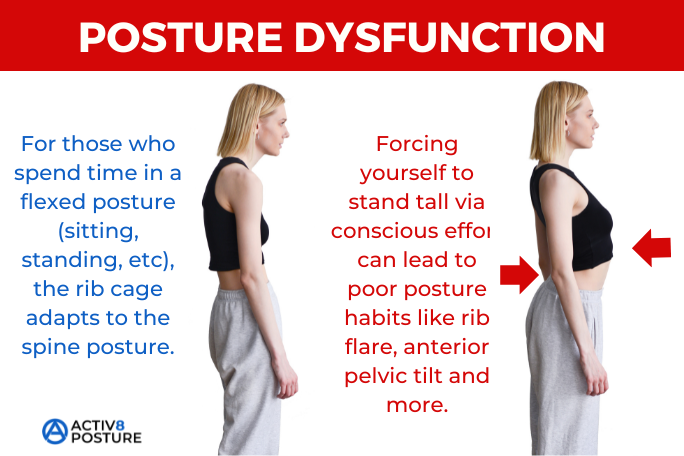
- Pelvis and lower back position. When the pelvis tips forward (anterior pelvic tilt) and the lower back arches (hyperlordosis), the rib cage often tilts back to keep you balanced, which points the lower ribs forward.
- Cues and training habits. “Chest up, shoulders back” and a lot of overhead or backbend-heavy training can reinforce the lifted-rib position.
- Asymmetry. One-sided sports, always carrying on the same side, or scoliosis can make one side flare more than the other.
- Structural differences. Some people are born with a chest wall shape, such as pectus excavatum, that makes the lower ribs more prominent. That’s a structural difference and one to discuss with a doctor.
Is Rib Flare Something to Worry About?
On its own, rib flare usually isn’t dangerous, and for many people it’s mainly a matter of how it looks. We still think it’s worth paying attention to, because it’s often a visible clue to how the whole body is organized: how you stand, how you breathe, and where your body is compensating.
See a doctor promptly, though, if you have rib pain after a fall or injury, chest pain, shortness of breath at rest, a new lump, or a change in your chest shape that appeared quickly.
Why Doesn’t More Ab Work Fix Rib Flare?
If you’ve already done the crunches, planks and “ribs down” cues and your ribs still flare, that’s not a discipline problem. It usually means the ribs aren’t the starting point. They’re responding to what the pelvis, spine and breathing are doing. Bracing harder can even make things worse, because many people hold their breath when they brace.
That’s why our therapists look at the whole body, from the feet up, and ask about your work, your training and your past injuries, instead of focusing only on where you see or feel the problem.
How Do You Fix Rib Flare?
Correcting rib flare usually means changing what’s holding the ribs up, not forcing them down. A few gentle starting points:
- Practice a full exhale. Lie on your back with your feet on a wall, hips and knees bent to about 90 degrees. Breathe out slowly through your mouth, as if fogging a mirror, until you feel the lower ribs soften down. Pause, then breathe in through your nose without letting the ribs lift. Four or five breaths is plenty.
- Change the cue. Swap “chest up” for “grow tall through the back of your head.”
- Notice your pelvis. When you stand, check whether your weight drifts forward into your toes and your lower back arches. The ribs often follow. These anterior pelvic tilt tests can help you check.
Go gently, and stop anything that causes pain. If nothing changes after steady practice, that’s useful information too: it usually means the main driver is somewhere else.
Video: Exercises for Rib Flare
Choosing Your Next Step
There’s no single right path. It depends on how you like to work:
- You’d like to work on it yourself, with structure. Our Fix Rib Flare course is a 4-week series with one guided routine a week and 90 days of access, for $29.
- You’d like someone to find what’s driving it. A free 30-minute consultation includes a postural assessment and a conversation about your lifestyle and history. We have clinics in Newton, Gloucester, Santa Monica, Beverly Grove and Middletown, RI.
- You’re not near a clinic. Virtual posture therapy brings the same assessment approach to you.
Frequently Asked Questions About Rib Flare
Can you fix flared ribs?
Often, yes. When rib flare comes from position and breathing habits rather than bone shape, it tends to respond to consistent work at any age. How much it changes, and how quickly, depends on the cause and on the person. Flare linked to a structural chest-wall difference behaves differently from flare linked to posture.
Is rib flare the same as pectus excavatum?
No. Pectus excavatum is a structural condition in which the breastbone sits sunken into the chest, and it can make the lower ribs look more prominent. Rib flare usually refers to the lower ribs being held in a lifted position. The two can look similar, so a doctor can help tell them apart.
Does rib flare go away on its own?
It rarely changes by itself if the habits behind it stay the same, because the body keeps organizing itself around those habits. Changing how you breathe, stand and train is usually what shifts it.
Is it OK to exercise with rib flare?
Generally, yes. Movement is helpful. It’s worth paying attention to exercises where the ribs lift the most, such as overhead pressing and backbends, and learning to breathe out fully through them rather than holding your breath.
This article is general education, not medical advice. If you have rib or chest pain, breathing difficulty, or a noticeable change in the shape of your chest, see a physician first. Posture therapy works alongside medical care, never instead of it.
Where to go next
- Browse Posture & Alignment for more on this topic.
- Read how we correct posture.
- Not sure where to start? A free 30-minute consultation and posture assessment, at one of our clinics or virtually, is the best first step.


