

12 Effects of Bad Posture on Your Body
Some links below are affiliate links. As an Amazon Associate, Activ8 Posture earns from qualifying purchases, at no extra cost to you. See our affiliate disclosure.

Quick answer: what does bad posture actually do to you? The effects with the best evidence are a two-way loop between poor sleep and new pain, measurable reductions in how much air you move, an association with neck pain in adults, and worse disability among people who already have back pain and sit a lot. Some common worries are smaller than they sound: the lower-back curve people are told to flatten is, on average, smaller in people who have back pain, and postural rounding of the upper back does not progress into a structural curve. In studies that followed 83,111 adults for an average of six years, sitting time on its own did not predict new low back pain. Each effect below is set against the evidence, and the section near the end covers the one thing that reliably predicts your outcome, which is not a shape.
Introduction
In our modern world most of us sit a great deal and move less than our bodies are built for. It is worth being precise about what that does and does not cause, because the popular version of this topic overstates it badly — and the overstatement is doing readers a disservice, not a favor. The way we carry ourselves significantly affects our physical functions and psychological health. In this article, we’re exploring twelve problematic, long-term effects of bad posture that you can overcome with improved alignment.
How Good Is the Evidence for Each of These?
Most articles on this topic give you a list and leave you to assume every item is equally solid. Here are the twelve, set against the evidence, plus two findings that cut across several of them. The section straight after the table explains where posture genuinely does act, and why that route is often indirect.
| Commonly listed effect | What the evidence actually shows |
|---|---|
| Poor sleep, and pain | Strongest item here, and the only prospective one. Sleep problems predicted new chronic musculoskeletal pain, odds ratio 1.79, across 153,685 people. It runs both ways |
| Reduced lung capacity and breathing | Measured, on a small evidence base. Forced vital capacity lower by 0.25 to 0.81 liters with a forward head position; 6 studies, 115 people |
| Neck pain and headaches | A real association in adults (r = −0.55 with pain intensity) — but none in adolescents, and every study was cross-sectional |
| Worse disability, if you already have back pain | Measured. Three or more hours a day of sitting went with worse back-pain-related disability, odds ratio 1.24 |
| Upper back and shoulder pain | Mechanism established; outcome not trialed. Position changes what the muscles crossing a joint can contribute — see the section below. What is missing is a study isolating posture as the cause of the pain |
| Reduced mobility | Mechanism established; outcome not trialed. Range of motion is measurable and responds to training. What has not been shown is that posture is what removed it |
| Too much lower-back curve causing pain | The evidence runs the other way. Pooled data found people with back pain had smaller lumbar curves than people without |
| Slouching reshaping your spine | Does not happen on its own. Postural kyphosis does not progress; structural change comes from compression fractures or Scheuermann’s disease |
We have left all twelve sections below in place, because people arrive here searching for them and deserve a straight answer about each. Where the evidence does not support the usual claim, the section says so.
Why the Link Is Often Indirect, and What That Changes
Several items above fail for the same reason, and it is worth naming plainly: posture does not act directly on your veins, your stomach or your sense of self. Where it does act is narrower and far better understood — on the relative length and force capacity of muscles, and on the quality of information your nervous system receives about where your joints actually are. When posture matters, it usually matters through one of those two routes. That makes the link real but secondary, and the distinction is most of the difference between a claim that holds and a claim that does not.
Length and force. How much force a muscle can produce depends on how long it is at the moment you ask of it. Joint position sets muscle length. So where a joint habitually rests changes what the muscles crossing it are able to contribute. That is basic muscle physiology rather than anything contested, and notice what it does not require: no postural ideal to deviate from, only that position and capacity are linked.
Position sense. This is measurable, and it differs. A meta-analysis of 22 studies and 1,203 participants found people with low back pain were worse at repositioning their lumbar spine accurately when tested actively in sitting — a standardized mean difference of 0.97 — and worse at detecting slow passive movement. Carry the limits with it: the same pooling found no significant difference when the test was done in standing (0.41, confidence interval crossing zero) or passively in sitting, and it compares groups at a single point in time, so which came first is unestablished. What it does establish is that position sense is not uniform between people — and that it varies with the position you are tested in.
Weighting and timing. A 2025 study went a step further, comparing 25 people with recurrent low back pain against 20 controls. The back-pain group leaned more on ankle proprioception and less on feedback from the muscles alongside the spine. In the same people, the onset of the multifidus, erector spinae and deep abdominal muscles was delayed during a lifting task, overall trunk muscle activity was higher — more effort for the same job — and the sensory measure correlated with the timing measure. It is small, single-site and cross-sectional, so read it as a demonstration of the mechanism rather than proof of how common it is. But it is the chain made visible: change what the nervous system knows about position, and what the muscles do changes with it.
Add one piece of ordinary neurophysiology. When a muscle contracts, its opposite number is actively inhibited through spinal circuitry. Which muscles are being asked to work, and in which position, therefore shapes what the ones around them are permitted to do. That is mechanism rather than outcome evidence and we will label it as such — but it is textbook, not speculation.
Why a Tight Hamstring Is a Finding, Not an Explanation
Here is where this becomes practical, and where our reading departs from the usual one.
Something that feels tight is not necessarily short. A review in Physical Therapy examined what actually changes when flexibility improves and concluded that the gains from a single stretching session, and from programs lasting three to eight weeks, come from modified sensation rather than any lasting increase in muscle length. Muscle does elongate while you hold a stretch, because of its viscoelastic properties, but that is temporary. Beyond eight weeks, the authors note, nobody had properly evaluated it.
So when a hamstring feels tight, the better reading is usually that your nervous system is objecting to that position — not that the muscle has physically shortened. Stretch it and the sensation eases, which is exactly why stretching feels productive. The tightness returns because nothing asked a different question.
What we do instead is ask why those muscles are being recruited that way. A hamstring that works constantly, or a hip flexor that dominates, is a finding to explain rather than a source to treat. What position is the pelvis resting in? What is the joint above or below it not contributing? What is the nervous system getting — and not getting — about where the body is? Treat the tight muscle on its own and it tends to come back, because the arrangement that required it has not changed. Change the arrangement and the muscle has a reason to behave differently.
It is also why “does bad posture cause this” is slightly the wrong question. A static shape in a photograph is a poor predictor of almost anything — that is the honest finding, repeatedly, and the table above reflects it. What varies between people, and what responds to work, is something else: what you can do, what you can tolerate, how well the right muscles fire at the right moment, and how accurately you sense where you are. The table grades the claims. It is not a verdict on whether any of this matters.
1. Spine Curvature
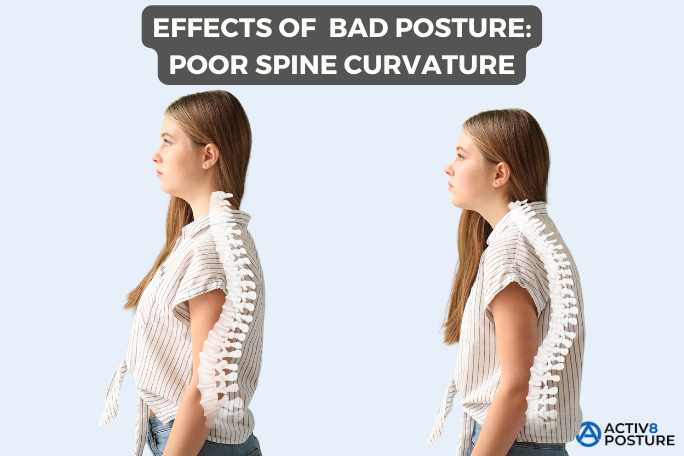
First up on our list is spine curvature. Hunching over a keyboard or slumping in front of the TV can lead to a misalignment of the spine. Here the popular claim overshoots, and it is worth being exact. Bodies do adapt to what you ask of them, and a habitually rounded upper back can feel stiff and strained. But rounding does not reshape the bones of your spine. The American Academy of Orthopaedic Surgeons describes postural kyphosis — the rounded upper back that softens when you stand up tall — as rarely painful, and notes that because the curve does not progress, it does not usually lead to problems in adult life. Structural change in the vertebrae has specific causes: compression fractures, or Scheuermann’s disease, which involves wedge-shaped vertebrae and does not straighten out. The ten-second test that separates them: lie flat on a firm surface, or stand as tall as you can. A postural curve reduces. One built into the bones does not. If yours does not change, and especially if you are over 50 or have lost height, that is worth a medical conversation rather than a new exercise routine. Good ergonomics can help, but the key to good posture and improved health and wellness is MOVING MORE!
2. Low Back Pain
The burden of poor posture often falls on the lower back. Some people get stuck in low back extension (lordosis), and others are fixed in flexion (flat back or reverse curve). That is the usual story, and the pooled evidence does not support it. A meta-analysis of thirteen studies, 796 people with back pain against 927 without, found the people with back pain had smaller lumbar curves, not larger. The effect was small and every study was cross-sectional — a sore back is often held flatter and more guarded, so the direction is unsettled — but it points the opposite way to the advice to flatten an excessive arch. Slouching for long stretches is genuinely uncomfortable, and positions held too long are worth changing. What the evidence does not support is a straight line from a particular spinal shape to persistent back pain. Researchers who measured eight postural angles in 99 healthy people concluded there is no optimal posture to deviate from in the first place. These muscle imbalances tend to exacerbate health issues, turning small aches and minor discomfort into chronic problems. Researchers of 766 adolescents’ standing postures concluded that a more neutral thoracic, lumbar, and pelvic posture are associated with less back pain.
3. Upper Back & Shoulder Pain
Ever noticed a nagging pain in your shoulders or upper back after a long day at the desk? That’s poor posture rearing its ugly head again. Slouching can force your upper back and shoulders to bear an unfair share of your body weight, leading to muscle fatigue and pain side effects.
4. Neck Pain & Headaches
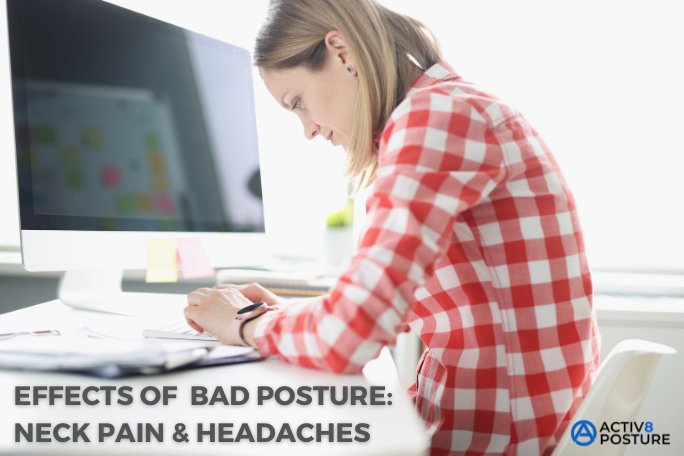
Your neck isn’t spared when your posture is out of alignment. Straining to look at a screen or bending your neck to look at a phone can cause tension headaches and chronic neck pain. And since the spine’s natural curves are designed to work harmoniously, neck pain and headaches often accompany upper back pain, shoulder pain, and lower back pain. Studies of office workers show the relationship between forward head posture and thoracic kyphosis to neck pain.
It is worth knowing how strong that link is. A meta-analysis of fifteen studies found a real association in adults — head position correlated with neck pain intensity at r = −0.55 — but no significant association in adolescents, the group who use phones most. Every study was cross-sectional, so which came first is unestablished: a neck that has hurt for years is commonly held differently because it hurts.
5. Increased Risk of Injuries
According to a study published in Spine, posture is a significant mechanical factor to consider when assessing the lumbar spine. Where posture and movement measures have been tested against future injury, no single shape has proved a reliable predictor — which is why an assessment looks at how you move and load, not just how you stand.
6. Decreased Mobility
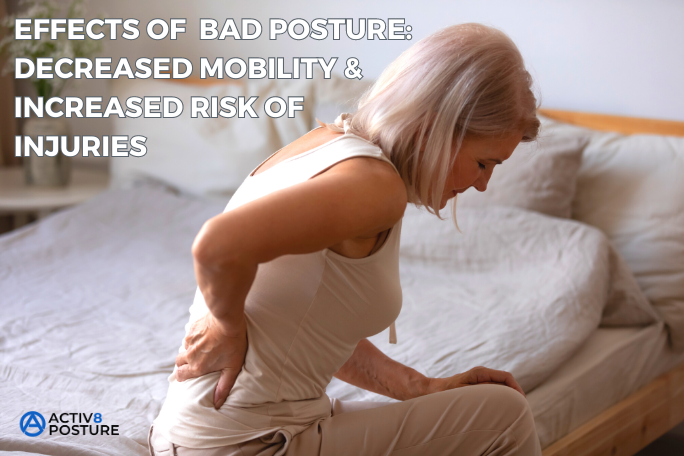
Poor posture also limits mobility for many people as the body due to the inherent muscle imbalances. Range of motion is real, measurable, and it responds to training — which is a different and better-supported claim than saying posture took it away. One finding is worth adding here, because it is measured: among people who already have low back pain, three or more hours of sitting a day went with worse pain-related disability (odds ratio 1.24), even though sitting time did not predict getting back pain in the first place. So if something already hurts, how much you sit appears to matter for how much it limits you.
7. Poor Circulation
Being folded up in one position for hours is uncomfortable, and at least one study has shown changes in peripheral blood flow with only slight changes in posture — a good reason to change position and move often. Varicose veins, spider veins and lymphatic problems have their own well-described causes, so if you have them, they are worth a physician’s look.
8. Reduced Lung Capacity and Breathing Difficulties
Poor posture, such as kyphosis and swayback, can restrict the expansion of the rib cage for the lungs and diaphragm, making breathing difficult and reducing lung capacity. These and other poor postures further lead to breathing difficulties, especially in people with asthma or chronic obstructive pulmonary disease (COPD).
This is one of the few items on the list with measured numbers behind it. A 2024 systematic review pooled six studies of forward head posture and breathing. Forced vital capacity — the total volume you can blow out in one breath — was lower by 0.25 to 0.81 liters, and forced expiratory volume in one second by 0.16 to 0.93 liters. Head position correlated with both (r = 0.53 to 0.63 for vital capacity), and diaphragm movement was roughly 15% less. The evidence base is small — 115 people across the comparison studies, in young adults — and the authors put it carefully: forward head posture “can potentially cause abnormalities in pulmonary function.” Potentially is their word, and we will keep it. But of everything on this page, how much air you move is among the better-supported.
9. Poor Sleep
Chronic discomfort from bad posture can disturb your sleep patterns, making it difficult to find a comfortable sleeping position and leading to poor sleep quality. A 2021 study showed that people with neck pain and stiffness in the morning spent most of their night in pain-provoking sleeping postures. Poor sleep quality also predicts new pain onset and aggravates current pain, creating a vicious cycle.
The sleep connection is the best-evidenced item on this entire page, and it is worth understanding what it actually says. A 2023 meta-analysis of prospective studies — 153,685 people followed over time, not measured once and correlated — found that people with sleep problems went on to develop chronic musculoskeletal pain at an odds ratio of 1.79 (95% CI 1.55 to 2.08), and persistent pain at 2.04. In the other direction, people with chronic pain went on to develop new sleep problems at an odds ratio of 2.02. The authors call it robust evidence of a genuinely two-way relationship.
Note carefully what that does and does not show. It is strong evidence that sleep and pain drive each other. It is not evidence that your posture is what disturbed your sleep. The practical consequence is still real, and it is why we ask about sleep: if you are in a loop where pain costs you sleep and poor sleep amplifies pain, treating only one side of it is doing half the job.
10. Digestive Problems
Reflux, bloating and constipation are common and have real causes worth investigating with a physician, so if you have them, start there. Moving regularly through the day is worth doing either way.
11. Decreased Energy Levels and Fatigue
Discomfort is tiring. Pain that demands your attention makes it harder to focus and can sap motivation, and poor sleep — the best-evidenced item on this list — feeds directly into how much energy you have. Easing the discomfort is part of getting that energy back.
12. Negative Impact on Self-Esteem and Confidence
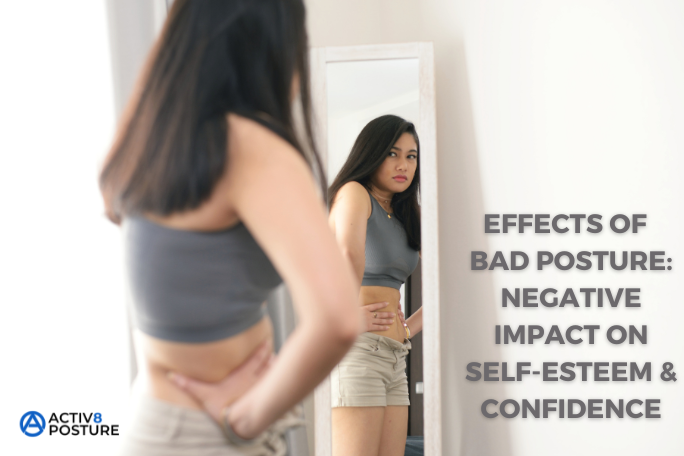
Many people say they feel more capable standing tall, and there is laboratory work suggesting that how you hold yourself can change how you feel in the moment. Feeling better in your body is a real and worthwhile reason to do this work. The fullest statement of the idea is Amy Cuddy’s own book, Presence: Bringing Your Boldest Self to Your Biggest Challenges — worth reading as the case for it, alongside the replication debate that followed.
What Actually Predicts How This Goes for You
If most of the twelve are weaker than advertised, a fair question is what to take seriously. There is an answer, and it is not a shape.
Researchers looked at 11,941 people treated for low back pain across eleven states and grouped them by how long they had had symptoms before starting care. Then they measured how much function each group gained.
| How long symptoms had lasted | Function gained (0–100) | Visits |
|---|---|---|
| Under 14 days | 29.32 | 13.66 |
| 15 to 90 days | 21.66 | 14.05 |
| More than 90 days | 15.92 | 14.63 |
Look at the visit counts first. All three groups attended an almost identical number of appointments, and the gains differed by nearly twofold. Waiting did not close the door — the long-duration group still gained about sixteen points — but it appeared to cost roughly half of what was available.
Two caveats, and the second one is interesting. This was a retrospective look at clinical records rather than a randomized trial, so people who sought care quickly may differ from those who waited in ways nobody measured. And acute back pain often improves on its own, which means part of that 29-point gain in the first group is natural recovery rather than treatment. That cuts in an unexpected direction: the sixteen points in the long-duration group is the number most fairly credited to the care itself, because pain lasting beyond three months has already shown it is not resolving unaided.
And what responds, when it does? Pooled across 249 trials and 24,486 participants, exercise reduced chronic low back pain by 15.2 points on a 100-point scale against no treatment — a clinically important difference — while the lumbar curve itself did not change significantly in the trials that measured it. Your range of motion, your strength, how well the right muscles coordinate and fire, how quickly a new movement pattern stops needing conscious attention, and how much you can load before symptoms show up: those are the things that move. They are also the things worth measuring, instead of an angle in a photograph.
Where Posture Therapy Fits
Posture therapy works on the part of this you can change: how your body is loaded and how it moves. At Activ8 Posture, that starts with an assessment of how you stand, sit and move, followed by a therapy program of corrective exercise built around what we find. Sessions run at our clinics in Boston and Los Angeles, or as virtual sessions from home.

FAQs
What are the long-term effects of bad posture?
The effects most consistently linked to posture are musculoskeletal: back, neck and shoulder pain, stiffness, muscle fatigue and reduced mobility, usually because the same positions and movement habits load the same tissues day after day. Posture is one part of the picture rather than a single cause, and strength, mobility and movement habits are all trainable at any age.
What are the effects of bad posture when sitting?
The most common are lower back pain, neck strain, tension headaches and shoulder tension, depending on how your workstation is set up and the posture patterns you bring to the chair. Sitting slumped for long periods also makes a full, easy breath harder to take, which is one more reason to change position often.
What are the effects of bad posture?
Most of the effects are physical: aches in the back, neck and shoulders, stiffness, tiredness from muscles working harder than they need to, and less comfortable movement. Many people also say they feel more confident and alert when they sit and stand taller. Each of these has other causes too, so posture is best seen as one part of the picture.
How long does it take to correct posture?
It varies from person to person, depending on how long a pattern has been in place, your overall health and how consistently you do your exercises. Many people feel a difference after the first session. Making the change stick usually takes a few weeks of regular exercise, and longstanding patterns can take several months. Posture change is ongoing rather than a one-time fix.
How can I get started on fixing my bad posture?
Taking the first step towards correcting your posture is as easy as reaching out to a professional for guidance. Activ8 Posture offers a comprehensive posture therapy and movement coaching program to improve your posture and address related chronic pain issues. You can get started by booking your first appointment or a free consultation with us at our Boston or Los Angeles clinics, or do virtual sessions if that suits you better. Our experienced posture therapists would love to get to know you better. We’ll listen to your story, assess your posture and movement patterns, identify problem areas, and create a tailored plan to help you on your journey to better posture and whole-body health.
Can you correct years of bad posture?
Yes, even if you’ve had bad posture for many years, it’s never too late to make improvements. Engaging in targeted exercises, maintaining awareness of your posture, and possibly seeking the help of professionals like physical therapists or chiropractors can all contribute to postural correction. It may take time and consistent effort, but the changes can lead to reduced pain and improved quality of life.
Can bad posture do permanent damage?
Posture on its own rarely causes permanent damage. Long-held positions and movement habits can contribute to stiffness, weakness and pain that build up over years, but most of that responds to strength, mobility and movement work at any age. Structural changes such as bone loss or arthritis have their own causes and are worth checking with your doctor.
What muscles are affected by poor posture?
Poor posture can affect numerous muscles throughout the body. Frequently, the muscles in the neck, shoulders, hips, and back are most directly impacted. Slouching, for example, can lead to chronic tension and weakness in the neck and upper back muscles. Sitting with a hunched back can cause the muscles around the spine to become weak, while the hip flexors and hamstrings can become tight from prolonged sitting. Over time, these muscle imbalances can contribute to pain, stiffness and reduced mobility. The same muscles respond well to targeted strength and mobility work.
Sources
- Alzahrani H, et al. The association between sedentary behavior and low back pain in adults: a systematic review and meta-analysis of longitudinal studies. PeerJ 2022;10:e13127. 16 longitudinal studies, 100,002 participants, average follow-up 6.29 years.
- Santos M, Gabani FL, de Andrade SM, Bizzozero-Peroni B, Martínez-Vizcaíno V, González AD, Mesas AE. The bidirectional association between chronic musculoskeletal pain and sleep-related problems: a systematic review and meta-analysis. Rheumatology 2023;62(9):2951–2962. 153,685 individuals in the meta-analysis; prospective studies.
- Deniz Y, Ertekin D, Cokar D. The effect of forward head posture on dynamic lung volumes in young adults: a systematic review. Bulletin of Faculty of Physical Therapy 2024;29:15. Six studies; 115 participants in the comparison analyses.
- Walston Z, McLester C, McLester J. Effect of low back pain chronicity on patient outcomes treated in outpatient physical therapy: a retrospective observational study. Archives of Physical Medicine and Rehabilitation 2020;101(5):861–869. 11,941 patients. Retrospective, not randomized.
- Chun S-W, Lim C-Y, Kim K, Hwang J, Chung SG. The relationships between low back pain and lumbar lordosis: a systematic review and meta-analysis. The Spine Journal 2017. 13 studies; 796 patients and 927 controls. All cross-sectional.
- Claeys K, Brumagne S, Deklerck J, Vanderhaeghen J, Dankaerts W. Sagittal evaluation of usual standing and sitting spinal posture. Journal of Bodywork and Movement Therapies, 2016. 99 healthy people.
- Mahmoud NF, et al. The relationship between forward head posture and neck pain: a systematic review and meta-analysis. Current Reviews in Musculoskeletal Medicine, 2019. Fifteen cross-sectional studies; adults versus adolescents.
- Hayden JA, Ellis J, Ogilvie R, Malmivaara A, van Tulder MW. Exercise therapy for chronic low back pain. Cochrane Database of Systematic Reviews, 2021. 249 trials, 24,486 participants.
- Kyphosis (Roundback) of the Spine. OrthoInfo, American Academy of Orthopaedic Surgeons.
- Tong MH, Mousavi SJ, Kiers H, Ferreira P, Refshauge K, van Dieën J. Is there a relationship between lumbar proprioception and low back pain? A systematic review with meta-analysis. Archives of Physical Medicine and Rehabilitation 2017;98(1):120–136. 22 studies, 1,203 participants. Cross-sectional comparisons.
- Suehiro T, Ishida H, Ito T, Kobara K, Osaka H, Oku K, Yakusue A. Altered proprioceptive weighting and trunk muscle activation in individuals with recurrent low back pain: a cross-sectional study. BMC Musculoskeletal Disorders 2025;26:913. 25 patients and 20 controls — small and single-site.
- Weppler CH, Magnusson SP. Increasing muscle extensibility: a matter of increasing length or modifying sensation? Physical Therapy 2010;90(3):438–449. A review of mechanisms, not a trial.
Related reading: What Does Posture Help With and How Can I Fix Mine?.
Where to go next
- Browse Posture & Alignment for more on this topic.
- Read how we correct posture.
- Not sure where to start? A free 30-minute consultation and posture assessment, at one of our clinics or virtually, is the best first step.


