
Duck Feet
Quick answer: Duck feet, or out-toeing, is when one or both feet point outward instead of straight ahead as you stand and walk. It shows up at the feet, but it usually starts higher up, at the hips and in how the legs rotate. In adults it’s most often a pattern of muscle balance and habit, though sometimes the bones themselves are twisted, which changes what’s realistic to expect.
Maybe you glanced down in a store window and noticed your feet angled out like a clock at ten to two. Maybe a running coach pointed it out, or your shoes keep wearing down on one side. Or maybe your knees, hips or feet have started to complain and you’re wondering whether it’s connected. It often is, and it’s worth understanding why.
What Are Duck Feet?
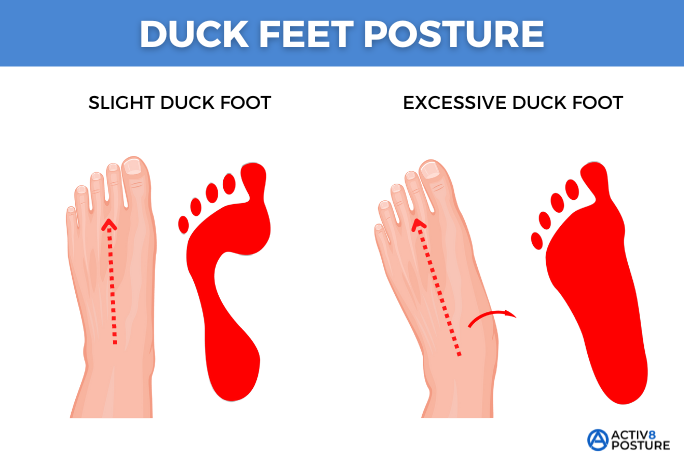
When you stand relaxed, your feet would ideally point roughly straight ahead. With duck feet, one or both turn outward, often unevenly. The turn usually comes from the leg rotating outward at the hip or shin, not from the foot itself. The opposite pattern, feet turning inward, is called in-toeing or pigeon toes.

Duck Feet Test: Do I Have Duck Feet?
A few simple checks:
- Standing check. Stand relaxed without looking down, then look. Do your feet point straight ahead, or angle outward? Is one turned out more than the other?
- Footprint check. Wet your feet and walk a few steps across concrete or a paper towel. Your footprints will show how much each foot turns out.
- Shoe check. Compare the soles of a well-worn pair. Uneven wear between the left and right shoe is a common clue.
- Video check. Ask someone to film you walking toward and away from the camera. It’s much easier to see your pattern from the outside.
While you’re standing, also notice your knees and arches. Knees that drift inward, or arches that flatten and roll in, often travel with out-toeing.
What Causes Duck Feet?
- Hip rotation and muscle balance. Tight muscles at the back and outside of the hips can hold the thighs rotated outward, while under-used glutes and inner-thigh muscles don’t balance them. This is the most common pattern we see in adults.
- Pelvis and lower back position. A forward-tilted pelvis (anterior pelvic tilt) or a sway back posture changes how the legs hang from the hips and often comes with out-toeing.
- Feet and ankles. Flat or rolling-in arches (overpronation) and stiff ankles can both encourage the feet to turn out.
- Bone rotation. Out-toeing can also come from the bones themselves: an outward twist of the shin (external tibial torsion) or of the thigh bone (femoral retroversion). These are structural, and exercise doesn’t change bone shape.
- Habits, sport and injury. Long hours sitting, sports that reward a turned-out stance, and past ankle, knee or hip injuries can all reinforce the pattern.
Is Duck Feet a Problem?
Not always. A slight outward turn is common, and many people with duck feet feel perfectly fine. It’s worth paying attention to when it’s clearly one-sided, when it’s getting more noticeable, or when it comes with discomfort. Because out-toeing changes how force travels up from the ground, people who have it commonly describe:
- Knee aches, especially with knees drifting inward on stairs or squats
- Foot and heel discomfort, including plantar fasciitis
- Tightness or aching on the outside of one hip
- Ankles that feel less stable, or arches that tire easily
- Squats, lunges and running that never feel quite even
None of these proves duck feet is the cause, and having duck feet doesn’t mean you’ll develop them.
Duck Feet in Children
Out-toeing in babies and young children is common and often part of normal development. According to the Pediatric Orthopaedic Society of North America, out-toeing from how a baby lay in the womb usually settles once the child starts walking, while an outward twist of the shin bone may not. If you’re concerned about your child’s walking, or they limp, trip often, or have pain, start with their pediatrician.
How Do You Fix Duck Feet?
Here’s the thing most people try first: consciously pointing their feet straight. It feels like it should work, but if the hips are still rotated outward, forcing the feet straight just moves the twist to the knees. That’s why it rarely sticks, and why it can feel awkward or even uncomfortable.
What tends to help is working from the hips down: restoring rotation at the hips, waking up the muscles that should be steering the thighs, and improving how the ankles and feet move. When the hips stop pulling the legs outward, the feet have somewhere to go. How much the foot angle changes varies from person to person, and out-toeing from bone rotation won’t change the same way.
Exercises for Duck Feet
Two gentle starting points. Stop anything that causes pain.
1. Foot Circles and Point Flexes
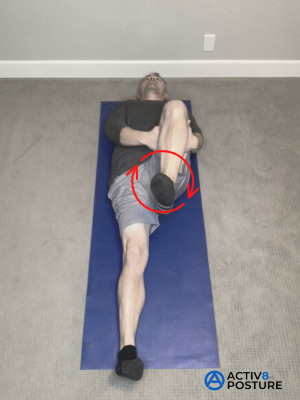
Lie on your back with one leg straight on the floor. Bring the other knee toward your chest and hold behind the thigh with both hands. Keeping the knee still, circle that foot slowly 20 times in one direction, then 20 times in the other. Then point and flex the foot 20 times. Switch legs. Keep the foot pointing straight up toward the ceiling as you move, and notice whether one ankle moves more freely than the other.
2. Standing Awareness Check
A few times a day, stand with your feet hip-width apart and let them point as straight as they comfortably can, without forcing. Notice where you feel it: in the hips, the knees, the feet. If turning your feet in makes your knees feel twisted, that’s your body telling you the hips are the place to start, not the feet.
A structured routine does what these two can’t: it works through the hips, pelvis, legs and feet in the right order, week by week.
Choosing Your Next Step
There’s no single right path. It depends on how you like to work:
- You’d like to work on it yourself, with structure. Our Fix Duck Feet course is a four-week self-guided series with one video routine a week and 90 days of access, for $29.
- You’d like someone to find what’s driving it. A free 30-minute consultation includes a postural assessment of how you stand and walk. We have clinics in Newton, Gloucester, Santa Monica, Beverly Grove and Middletown, RI.
- You’re not near a clinic. Virtual posture therapy brings the same assessment approach to you.
Frequently Asked Questions About Duck Feet
Can duck feet be corrected in adults?
When out-toeing comes from how the hips and legs are working, it often changes with consistent, targeted work at any age. When it comes from a twist in the bones, such as tibial torsion or femoral retroversion, the bones won’t change shape, though the muscles around them can still work better. An assessment can help tell the two apart.
Should I force my feet to point straight?
Not on its own. If the hips are still turned out, forcing the feet straight shifts the twist to your knees. Work on hip rotation and control first, and the feet usually find a straighter position more naturally.
Do special shoes or orthotics fix duck feet?
Shoes and inserts can make feet more comfortable, especially with flat or rolling-in arches, but they don’t change what the hips are doing. They can be a useful support while you work on the underlying pattern rather than a replacement for it. If a podiatrist has prescribed orthotics, keep using them unless they advise otherwise.
Are duck feet and flat feet related?
Often. When the feet turn out, the arches tend to roll inward and flatten, and flat feet can in turn encourage out-toeing. See our guides to pronation and flat feet.
How long does it take to fix duck feet?
It varies. The cause, how long the pattern has been there, and how consistently you work on it all matter. That’s why the course moves one week at a time, and why an assessment gives a more realistic picture than any general timeline.
This article is general education, not medical advice. If you have foot, knee or hip pain, a limp, or out-toeing that appeared after an injury, see a physician, orthopedist or podiatrist first. For children, start with their pediatrician. Posture therapy works alongside medical care, never instead of it.
Related reading: Leg and Knee Alignment: the complete guide.
Where to go next
- Browse the Posture Dictionary for related terms.
- Not sure where to start? A free 30-minute consultation and posture assessment, at one of our clinics or virtually, is the best first step.