

What is Levoscoliosis? A Guide to Understanding & Managing It
Quick answer: Levoscoliosis is a sideways curve of the spine that bends to the left. It shows up at every age, and the type matters. Functional curves — where the spine compensates for a tilted pelvis or uneven hips — often respond well once the cause is addressed. Idiopathic curves in children and teens benefit from an active, individualized exercise approach rather than simply watching, with bracing when a growing curve is moderate. A left-sided curve in the upper back is less typical, so specialists often check it more closely.
Levoscoliosis, a condition marked by a leftward curvature of the spine, is more than a structural abnormality—it’s a life-altering challenge for many. At Activ8 Posture, we recognize the complexity of this condition and its profound impact on individuals’ lives. In this article, we’ll explore levoscoliosis holistically, emphasizing the importance of understanding and managing this condition with compassion and expertise.

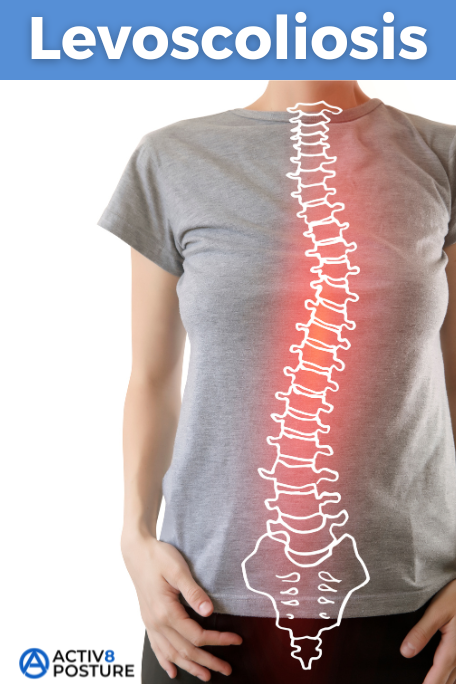
Levoscoliosis is a type of scoliosis that involves the spine curving to the left.
What is Levoscoliosis?
Levoscoliosis is a medical condition where the spine curves to the left, forming a “C” or “S” shape. This condition, while less common than dextroscoliosis, which curves to the right, still impacts many people, especially adolescents. According to the American Academy of Family Physicians, about 85% to 90% of adolescent idiopathic scoliosis cases manifest as a curve to the right in the thoracic spine. However, when a leftward curve in the thoracic spine is present, it often suggests the potential for additional underlying medical issues, which is why specialists often check it with an MRI. Gaining a clear understanding of levoscoliosis — including its causes, symptoms, and treatment strategies — is essential for anyone aiming to maintain a healthy and comfortable lifestyle.
What are the Signs and Symptoms of Levoscoliosis?
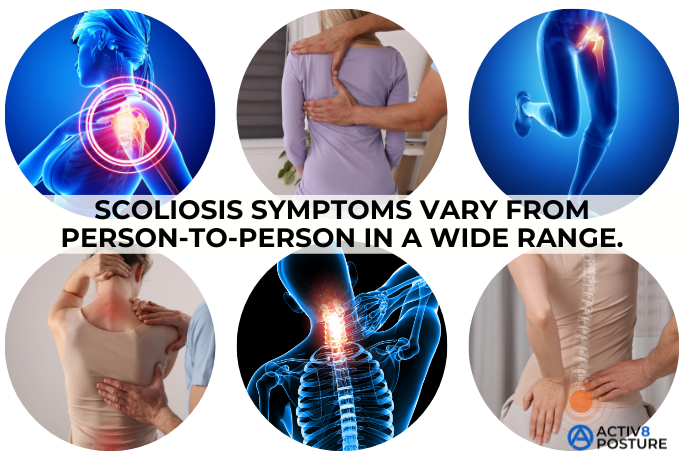
The signs and symptoms of levoscoliosis can vary depending on the severity and location of the left-side curve (determined by X-ray). Not everyone experiences the full range of symptoms, which can affect youth and adults differently. Common signs and symptoms of adolescent idiopathic and adult-onset levoscoliosis include:
- Visible Spinal Curve: One of the primary signs of levoscoliosis is an observable curvature of the spine towards the left (in either the thoracic spine or lumbar spine) when viewed from behind.
- Hip Pain: Individuals with levoscoliosis often experience discomfort or pain in the hips due to the uneven distribution of weight and altered pelvic and lower body biomechanics.
- Shoulder Pain: The asymmetry caused by the spinal curvature can lead to shoulder pain, with one shoulder often sitting higher than the other.
- Neck Pain: The misalignment of the spine can extend to the cervical region, causing neck pain and stiffness.
- Headaches: Tension in the neck and upper back muscles and potential breathing problems can contribute to frequent headaches.
- Rib Flare: On the side of the curvature, ribs may protrude more prominently, known as rib flare, due to the twisting of the spine.
- Abdominal Distension: The altered posture and spinal curvature can lead to a noticeable distension or asymmetry in the abdominal area.
- Back Pain and Discomfort: Chronic back pain, ranging from mild to severe, is a common symptom exacerbated by prolonged sitting, standing, or physical activity.
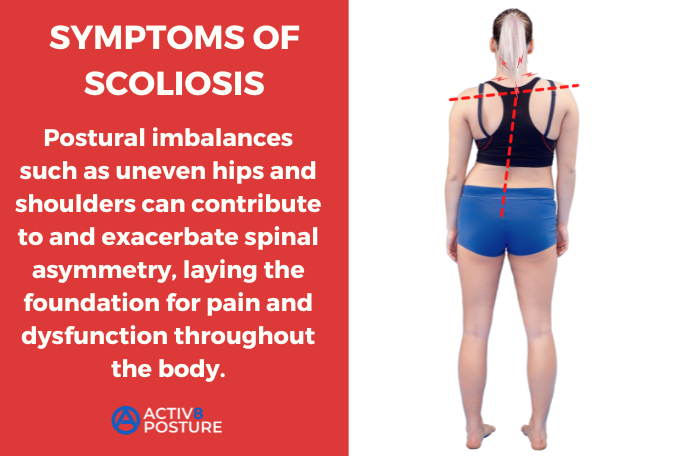
- Uneven Shoulders or Hips: The curvature makes the hips and shoulders appear uneven, with one side higher.
- Reduced Flexibility and Range of Motion: The spinal curvature often limits hip, shoulder, and back flexibility or range of motion, impacting daily activities.
- Muscle Fatigue and Stiffness: Muscles, particularly on one side of the back, become overworked, leading to fatigue, stiffness, and spasms.
- Respiratory Issues: In severe cases with thoracic involvement, lung function can be compromised, leading to breathing difficulties.
- Neurological Symptoms: Rarely, severe levoscoliosis can impinge on nerves or the spinal cord, resulting in numbness, tingling, or weakness.
- Cosmetic Concerns: The visible curvature and uneven posture can be sources of psychological distress and self-consciousness for many individuals.
It’s important to note that the intensity and range of symptoms can vary widely among individuals. Some may experience only mild discomfort or barely noticeable changes, while others may have significant physical and functional limitations due to more severe scoliosis. Regular monitoring and medical assessment are important for managing levoscoliosis effectively.
Long-Term Complications of Levoscoliosis:
- Degenerative Changes: Ongoing levoscoliosis can result in degenerative alterations within the spine, such as disc deterioration and osteoarthritis. These changes are often more pronounced at the curve’s apex.
- Nervous System Compromise: Even moderate forms of levoscoliosis can exert pressure on spinal nerves, possibly leading to sensations of numbness, tingling, or weakness in the extremities.
- Cardiovascular Effects: In severe cases, levoscoliosis may impact the heart and blood vessels, potentially affecting cardiovascular function and health.
- Musculoskeletal Imbalances: Over time, levoscoliosis can contribute to uneven muscle strain and joint pain, increasing the likelihood of injuries in other body parts due to compensatory postural adjustments.
- Mental Health Concerns: The physical challenges and appearance-related aspects of levoscoliosis can also impact mental health, potentially leading to lowered self-esteem and social anxiety.
Addressing levoscoliosis early and comprehensively is crucial for mitigating these long-term risks and maintaining overall health and well-being.
What Causes Levoscoliosis?
Understanding the roots of levoscoliosis involves exploring various factors, from genetic predispositions to lifestyle influences. While the known cause often remains elusive in most cases of scoliosis, a combination of developmental, neuromuscular, and environmental factors plays a role in its onset and progression:
Adolescent Levoscoliosis: Developmental Factors at Play
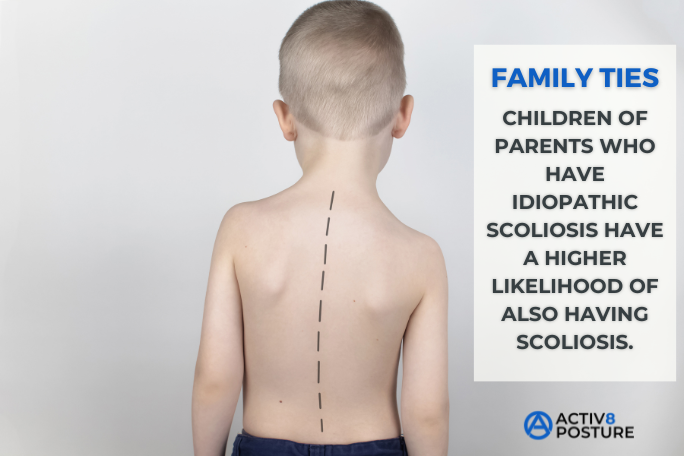
- Genetic Predisposition: There’s a notable familial trend in levoscoliosis, with genetics significantly increasing the risk (up to 50 times when both parents have idiopathic scoliosis). Children with a family history of scoliosis are much more likely to develop the condition.
- Developmental Imbalances: Crucial in the formation of levoscoliosis are the developmental stages from infancy. Factors like asymmetric growth patterns in bones of the spine or disparities in intervertebral disc growth can contribute to spinal curvature. Even prenatal factors, such as in-utero positioning, can influence postural development after birth.
- Neuromuscular Conditions: Conditions affecting muscle control and coordination, such as muscular dystrophy or cerebral palsy, can lead to spinal misalignments, contributing to the development of levoscoliosis.
- Postural Considerations: Although not a direct cause, poor posture during crucial growth phases can exacerbate the condition’s severity, influencing the curve’s progression. In our clinics, many more cases of asymmetrical patterns show up in youth for various reasons.
Adult-Onset Levoscoliosis: Lifestyle and Age-Related Influences
- Degenerative Changes: The natural aging process can lead to spinal degeneration, where wear and tear on vertebral discs and joints contribute to the development of a spinal curve in adulthood. (Most adult-onset scoliosis is known as “degenerative scoliosis.”)
- Progression of Existing Conditions: An untreated or undiagnosed scoliosis from adolescence can progress over time, manifesting as levoscoliosis in adults. Degenerative scoliosis often results in smaller curves than adolescent-onset idiopathic scoliosis.
- Trauma and Injury: Spinal injuries or trauma can lead to misalignments, potentially initiating or exacerbating a levoscoliotic curve.
- Occupational Factors: Certain professions involving repetitive movements or uneven spinal loading can contribute to the development of levoscoliosis due to the cumulative stress on the spine.
- Postural Imbalances: The importance of postural factors cannot be overstated in adult-onset levoscoliosis. Poor posture, especially with uneven hips and uneven shoulders, leads to compensatory changes in the spine. The interconnectedness of the musculoskeletal system means that imbalances in the pelvis (the spine’s floor) and shoulders (the spine’s ceiling) can create tension and misalignments in the spinal column, contributing significantly to the development of levoscoliosis.
Understanding these multifaceted factors is crucial for managing levoscoliosis effectively. This holistic approach ensures proactive measures and personalized treatment strategies.
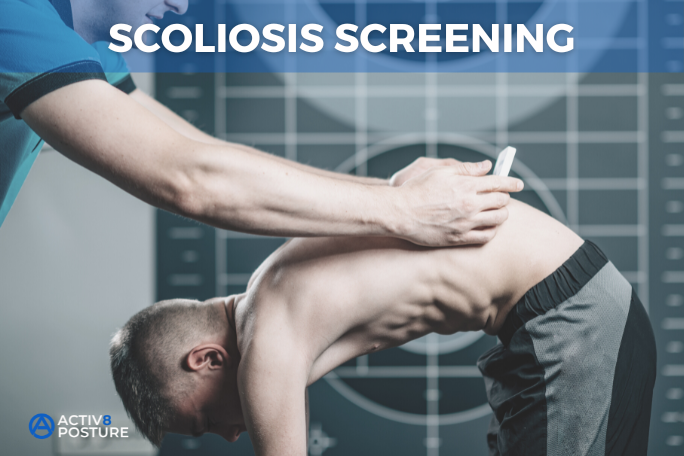
Early Detection is Key: Taking Action Against Levoscoliosis
Whether young or old, early detection and intervention are key to managing levoscoliosisrisk factors effectively. This involves:
- Regular checkups and monitoring: Even seemingly mild scoliosis cases require attentiveness, especially if symptoms appear.
- Proactive approach: Don’t ignore the signs and symptoms of an abnormal curve! Seek professional evaluation if you suspect levoscoliosis.
- Open Communication: Talk to your doctor, orthopedic specialist, and healthcare team about your concerns and questions.
Levoscoliosis vs. Dextroscoliosis: Understanding the Differences
While both levoscoliosis and dextroscoliosis are forms of scoliosis, their defining feature is the direction of the curvature of the spine. Here are the key differences:
1. Curvature Direction:
Levoscoliosis bends towards the left side of the body, while dextroscoliosis curves towards the right side. With either type of scoliosis, a designation of the thoracic or lumbar spine curves will be given.
2. Common Locations:
Levoscoliosis is more commonly observed in the lumbar spine (lower back), while dextroscoliosis is more frequently found in the thoracic spine.
3. Associated Conditions:
Levoscoliosis often arises from congenital spine deformities, neuromuscular disorders, or as part of a compensatory response. Dextroscoliosis, especially in adolescents, is commonly seen in idiopathic scoliosis and may have a stronger genetic link.
4. Symptom Differences:
While both can cause back pain and uneven shoulders and hips, the specific impact on body alignment and organ function can vary based on the location and severity of the curve. Levoscoliosis may affect right-sided activities and breathing in a more pronounced way (due to rib cage misalignment), while dextroscoliosis might impact left-sided activities and the descending aorta.
5. Functional Limitations:
Depending on the curve, either type of scoliosis can lead to reduced flexibility, difficulty bending or reaching, and fatigue on either side. Levoscoliosis limitations can be more pronounced on the right side of the body, affecting activities like loading the leg or carrying weight on the right shoulder. Dextroscoliosis limitations are more noticeable on the left side of the body.
6. Prevalence:
Dextroscoliosis is significantly more prevalent than levoscoliosis across both adolescent and adult populations. 85-90% of adolescent idiopathic scoliosis cases involve a rightward thoracic curve. Levoscoliosis is more common in the lumbar spine.
Which Type of Scoliosis Is It? Why It Matters
Scoliosis isn’t one condition, and it shows up at every age. The type shapes what helps:
| Type | What it is | Where posture work fits |
|---|---|---|
| Functional (nonstructural) | The spine itself is normal, but it curves to compensate — for a pelvis that sits higher on one side, a leg-length difference, or muscles pulling unevenly | Often responds well. When the cause is addressed, the compensating curve can reduce or resolve, especially when caught early |
| Idiopathic | The most common type, usually appearing in childhood or the teen years with no single known cause | Active, individualized exercise is recommended as a first step for mild curves, alongside medical monitoring and bracing when needed |
| Congenital | Vertebrae that formed differently before birth | The curve itself needs medical follow-up; our role is comfort, strength and how you move around it |
| Degenerative (adult-onset) | Develops in adulthood as discs and joints change | Strength, mobility and balance work help with comfort and function |
Proactive, Not Just “Wait and See”
Many families are told to monitor a mild curve and come back if it gets worse. International scoliosis guidelines take a more active view: they recommend scoliosis-specific exercise as the first step for mild idiopathic curves, to help prevent or limit progression. In one randomized trial of 110 teens with mild curves, an active self-correction exercise program improved the curve by about 5° compared with general exercise.
When a growing teen’s curve is moderate — above about 25° — bracing is the proven tool: 72% of braced teens avoided progression to the surgical threshold, compared with 48% of those only observed. Exercise works alongside the brace, not instead of it.
The whole-body piece that’s often missing. A spine doesn’t curve in isolation. A pelvis that tilts to one side or a hip that sits higher can feed a curve in the lower back, and shoulders that compensate can pull the ribs and upper back further off center. We assess from the feet up — feet, hips, pelvis, ribs and shoulders — and work on the patterns that keep feeding the curve, not just the curve itself.
We’re straightforward about what we find. After an assessment, we’ll tell you which pattern we see, how much of it we expect to change, and when something needs your doctor first.
Treatment Options for Levoscoliosis: Charting Your Path to Wellness
Treatment depends on the type of curve, its size, and whether the spine is still growing. Rather than only monitoring, an active approach works best alongside medical care: individualized exercise for mild curves, bracing for moderate curves in growing teens, and surgery for large or progressive curves. Posture alignment therapy is part of that active approach.

Beyond Strengthening and Stabilization:
Bracing has strong evidence in adolescents. In a landmark trial, 72% of braced teens avoided progression to the surgical threshold, compared with 48% of those who were only observed — and teens who wore the brace at least 13 hours a day succeeded 90–93% of the time. If your child has been prescribed a brace, wearing it as directed is the most important thing you can do.
Holistic Integration for Sustainable Results:
Where posture alignment therapy helps is the part a brace or an X-ray doesn’t address: how you stand, move and load your body around the curve. We work on strength, mobility and balance between the two sides of your body, which is what eases the aches and stiffness many people with scoliosis feel.
Beyond Pain Management, Embracing More Comfortable Movement:
Exercise has a clear track record for back pain: across 249 trials, it reduced chronic low back pain by 15.2 points on a 100-point scale. That is the goal of our work with scoliosis clients — less pain and better function, alongside your doctor’s care.
Personalized Pathways for Unique Journeys:
We understand that every individual’s experience with levoscoliosis is unique. That’s why we tailor your treatment plan meticulously, considering your specific needs, challenges, and goals. Whether you seek pain relief, improved flexibility, or complete postural transformation, we create a personalized roadmap to guide you every step of the way.
Choosing Posture Alignment Therapy means adding a proactive, whole-body approach to your care: building the strength, mobility and confidence to live well with levoscoliosis.
Embracing Your Whole Body: The Active8 Difference
Activ8 Posture’s philosophy extends beyond individual treatment modalities. We recognize that conquering levoscoliosis requires a comprehensive, whole-body approach embracing the interconnectedness of your musculoskeletal system.

Holistic Posture Alignment Therapy: Redefining Rehabilitation
Our revolutionary Posture Alignment Therapy transcends conventional physical therapy. We go beyond simply strengthening the core and back muscles. We address the entire postural chain, focusing on areas like hips, shoulders, and even the feet, which are crucial for optimal balance and spinal support. We promote symmetry, coordination, and proper alignment through targeted exercises and muscle engagement techniques, alleviating strain on your spine.
Empowering Posture Education: Knowledge is Power
Knowing how daily habits and activities influence posture is key to lasting improvements. Our dedicated team educates you on maintaining good posture throughout your day, from ergonomic adjustments at work to mindful movement practices. This empowers you to become an active participant in your recovery, preventing imbalances and future discomfort.
The Unifying Force of Tensegrity: Reimagining the Body
At the heart of our philosophy lies the tensegrity model, viewing the body as a dynamic network of tension and compression elements. We don’t isolate the spine; we analyze and treat your entire musculoskeletal system as a unified whole. This allows us to identify and address underlying imbalances that might contribute to or stem from levoscoliosis, creating lasting structural changes.
Personalized Pathways: Your Unique Journey Starts Here
We understand that each levoscoliosis experience is individual. Our expert therapists craft customized treatment plans tailored to your specific needs, challenges, and goals. Whether you seek pain relief, greater flexibility, or complete postural transformation, we guide you every step of the way, ensuring your journey is as unique and empowering as you are.
By embracing the whole body through Activ8 Posture’s multi-faceted approach, you embark on a transformative path, not just managing levoscoliosis, but reclaiming your body’s balance, strength, and confidence. Choose to move beyond symptom management and embrace a future where you own your posture, pain is a distant memory, and your body radiates well-being.
Frequently Asked Questions
What is levoscoliosis?
Levoscoliosis is a specific type of scoliosis where a portion of the spine bends abnormally to the left in a C-shaped curve. This curvature most often affects the lower back (lumbar spine), but it can also occur in the thoracic (mid-back) or cervical (neck) regions.
What is levoscoliosis of the lumbar spine?
Lumbar levoscoliosis is the most common form of levoscoliosis, where the leftward spinal curve occurs primarily in the lower back. This can lead to uneven hips, uneven shoulders, and back pain, depending on the severity of the curve.
How serious is levoscoliosis?
The severity of levoscoliosis varies greatly among individuals. In some cases, the curve is mild and causes minimal discomfort or functional limitations. However, severe curves can impact mobility, respiratory function, and overall quality of life. Early detection and proper management are crucial in mitigating the potential complications.
What is mild levoscoliosis?
Mild levoscoliosis refers to a relatively small curvature of the spine, typically measured by a Cobb angle under 25 degrees. While it may not cause noticeable symptoms immediately, it’s important to monitor mild curves through regular check-ups as they can progress over time.
What causes levoscoliosis?
The exact cause of levoscoliosis is often unknown, though several factors are believed to play a role:
- Genetics: A family history of scoliosis increases the risk of developing the condition.
- Development and Growth: Uneven growth patterns or anomalies in the growth plates of vertebrae can contribute to spinal curvature.
- Neuromuscular Scoliosis Issues: Conditions affecting muscle control or coordination can lead to spinal deformity and scoliosis.
- Degenerative Changes: Wear and tear on spinal discs and joints in adults can contribute to the development of levoscoliosis.
- Postural Imbalances: While not a direct cause, poor posture can exacerbate the severity of pre-existing scoliosis or contribute to its development over time.
Key Takeaways
Levoscoliosis is a sideways curve of the spine to the left. What it means for you depends on the type of scoliosis, your age and the size of the curve.
A proactive approach helps: scoliosis-specific exercise for mild curves, monitoring and bracing when a growing child needs it, and strength and mobility work for adults. Exercise works alongside a brace, not instead of it.
Take Control of Your Health with Activ8 Posture
Are you or a loved one navigating the challenges of levoscoliosis? It’s time to turn the page towards a healthier, more balanced life. At Activ8 Posture, our experts are ready to guide you on a transformative journey tailored to your unique needs.
Don’t let levoscoliosis dictate your quality of life. Seize this opportunity to work with our posture therapy experts and take a proactive step towards a more comfortable, empowered future.
Unlock the Benefits:
– Pain Reduction: Experience a significant decrease in discomfort and an increase in mobility.
– Posture Improvement: Watch as your posture transforms, bringing with it a newfound sense of confidence and well-being.
– Long-term Health: Equip yourself with the tools and knowledge for lasting spinal health and overall wellness.
Sources
- Weinstein SL, Dolan LA, Wright JG, Dobbs MB. Effects of bracing in adolescents with idiopathic scoliosis. N Engl J Med 2013;369(16):1512–1521. doi:10.1056/NEJMoa1307337
- Hayden JA, Ellis J, Ogilvie R, Malmivaara A, van Tulder MW. Exercise therapy for chronic low back pain. Cochrane Database of Systematic Reviews, 2021. 249 trials, 24,486 participants.
- Negrini S, Donzelli S, Aulisa AG, et al. 2016 SOSORT guidelines: orthopaedic and rehabilitation treatment of idiopathic scoliosis during growth. Scoliosis Spinal Disord 2018;13:3. doi:10.1186/s13013-017-0145-8
- Monticone M, Ambrosini E, Cazzaniga D, Rocca B, Ferrante S. Active self-correction and task-oriented exercises reduce spinal deformity and improve quality of life in subjects with mild adolescent idiopathic scoliosis: results of a randomised controlled trial. Eur Spine J 2014;23(6):1204–1214.
- Effects of physiotherapeutic scoliosis-specific exercise for adolescent idiopathic scoliosis Cobb angle: a systematic review
- Overview and spinal implications of leg length discrepancy: narrative review. Clin Orthop Surg. doi:10.4055/cios20224
Where to go next
- Browse Posture & Alignment for more on this topic.
- Read how we correct posture.
- Not sure where to start? A free 30-minute consultation and posture assessment, at one of our clinics or virtually, is the best first step.


