

How to Prevent Bunions: The Posture Connection
Quick answer: A bunion is a bony bump at the base of the big toe that forms as the toe angles inward. Genetics and foot shape play a big part, and tight, narrow shoes make it worse. You can’t exercise a formed bunion back into place, but roomy shoes, padding, toe and foot exercises, and better walking mechanics can ease pain and may help slow it down. Surgery is an option when pain keeps limiting your day.
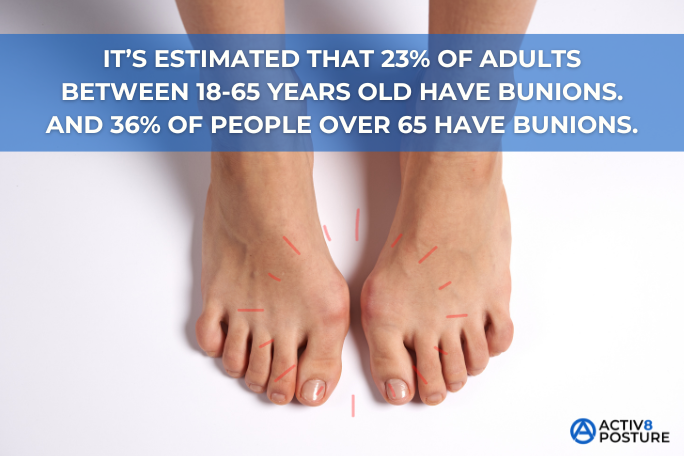
A bunion is a bony bump that forms at the base of the big toe when the joint drifts out of alignment and the toe angles inward. It is a symptom of altered foot mechanics rather than a growth, which is why it tends to progress unless what is driving it changes.
Introduction
We’ve all heard of bunions, those painful and often unsightly, bony bumps that can form at the base of the big toe. But did you know that these disorders can be a reflection of our overall posture? If you want to understand how to prevent bunions from a holistic perspective and find natural, sustainable solutions, this article is for you.
What Is a Bunion?
A bunion isn’t just a random growth. It’s a symptom of a deeper structural problem in the foot and, potentially, the entire body. A bunion stems from the foot’s altered mechanics, particularly from the misalignment of the MTP (metatarsophalangeal) joint. This misalignment can be an outcome of overall postural imbalances that affect the entire skeletal system, including the feet.

Bunion Progression:
Bunions (also called hallux valgus) can start out small but often worsen over time, especially if the root causes aren’t addressed. The more pronounced a bunion becomes, the more challenging and painful walking can be. Advanced bunions can dramatically change the foot’s appearance, with severe cases causing the big toe to angle towards or even under the adjacent toe. This misalignment can cause further issues, like hammertoe deformities and painful calluses.
What Causes Bunions?
Our body functions as an intricately linked system, where every part influences the other. Poor posture, often overlooked, can initiate a domino effect, causing misalignments throughout the body. Muscle imbalances can especially impact the foot’s mechanics, paving the way for several foot-related concerns, including the formation of bunions.
In addition to postural issues, footwear plays a significant role in the development of bunions. When you wear shoes with a narrow toe box or high heels, it can push the big toe inward, exacerbating the risk of bunion formation. Similarly, prolonged use of ill-fitting or unsupportive shoes can compound these alignment problems.
Other common causes include genetic predisposition, certain forms of arthritis like rheumatoid arthritis, and injuries that adversely affect the foot’s structure and balance. While a single factor might not directly lead to bunions, a combination of these elements can significantly increase the risk.
How Posture and Walking Patterns Can Contribute
Every step you take, every move you make, your feet are involved. The way your foot lands and moves is heavily influenced by your body’s alignment. For instance, if your pelvis tilts in a particular direction due to postural issues, it can change how your foot strikes the ground. Over time, these small but consistent changes in foot mechanics can lead to significant issues, like the formation of bunions.
Stand up and take a look down at your feet. Which way do they point? Does one foot turn out more than the other? Does that side happen to be your worse bunion?
The Importance of Hip Extension and Dorsiflexion in Walking
As you stride through life, the way you walk plays an essential role in foot health. During walking, particularly from the mid-stance to the terminal stance phases, two critical movements should happen efficiently: hip extension and dorsiflexion of the foot.
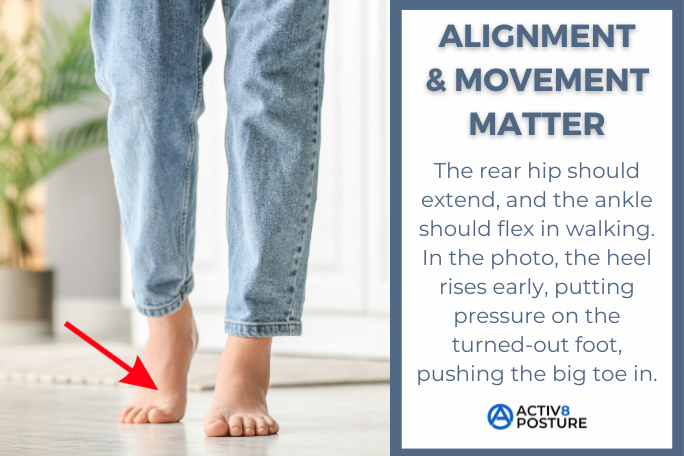
- Hip Extension: As the name suggests, hip extension occurs when your thigh moves backward during walking. Proper hip extension ensures that the leg’s full range of motion is achieved, leading to a well-distributed force throughout the foot as it strikes the ground.
- Dorsiflexion: This is when the top of the foot moves closer to the shin. In the context of walking, it’s the mobility of your ankle to flex as your leg travels under your body, a movement pivotal to smooth transitions between steps.
How Walking Patterns Can Affect the Feet
When these movements are restricted or done improperly, it can lead to a compensatory walking pattern. One common compensatory action is foot abduction, where the foot turns outward as it strikes the ground and stays turned out to work around the movement restrictions. Continuous forefoot abduction can exert undue strain on the big toe (or knee, ankle, foot), pushing it towards the second toe, potentially leading to bunion formation getting worse over time.
By ensuring proper hip extension and adequate dorsiflexion in your walking cycle, you’re not just promoting efficient movement. You’re also taking a proactive step in reducing the biomechanical strains that lead to foot pain and problems like flat feet, bursitis, and bunions. Thus, paying attention to these aspects of your gait and working with a posture therapist to correct any abnormalities can be an integral part of bunion prevention.
How to Prevent Bunions
Treat Your Feet Right: How to Prevent Bunions from Forming
Good foot health is about more than just picking the right shoes; it’s about the whole body. Posture therapy, a holistic approach, can address the root causes of bunions by correcting overall body alignment. By achieving a balanced posture, the forces exerted on our feet during standing and walking are more evenly distributed, potentially reducing the risk of bunion development.
Choose the Right Shoes: How to Prevent Bunions from Growing
While the alignment of our whole body plays a crucial role, so does shoe choice. The best shoes have a wide toe box with enough room for your foot to expand with walking, good arch support, and a sensible heel that can reduce pressure on the MTP joint, thus reducing the risk of developing bunions. Avoiding high heels and pointy shoes, which force the big toe joint into a cramped position, is also essential.
Corrective Exercises: Aligning Your Feet the Right Way
Correcting the alignment and mechanics of your feet is vital in preventing bunions. Through specific exercises, you can train your feet to adopt a more natural position and promote even weight distribution. Here are a few steps to integrate corrective exercises into your routine:
Toe Spread and Press: While sitting, place your feet flat on the ground. Spread your toes as wide as possible and then press them down, focusing especially on the big toe. This helps in strengthening and mobilizing the toes.
Heel Raises: Standing straight, slowly lift your heels off the ground, putting weight on the balls of your feet. This strengthens the muscles under the feet and encourages proper arch formation.
Foot Dome Activation: Sit with your feet flat on the floor. Without curling your toes, try to create a dome shape with the middle part of your foot. This action activates the small muscles in your feet, promoting proper arch formation and foot strength.
Walking Barefoot: Whenever it’s safe, walk barefoot on various surfaces. It helps in restoring natural foot mechanics and building intrinsic foot strength.
Remember, while exercises play a pivotal role, it’s also essential to seek guidance from professionals. Consider consulting with a trained posture therapy expert to ensure you’re performing exercises correctly and addressing your unique needs.
Treatment Options for Bunions
Easing Bunion Pain Naturally
Before jumping to surgical treatment options, it’s worthwhile to explore natural remedies. Posture therapy, which works to realign the body as a whole, offers benefits not just for existing bunions but for overall foot health. Addressing the foot’s altered mechanics through posture therapy can provide relief and may prevent further progression of the bunion. Other natural treatments, like using bunion pads or toe separators, can also provide relief as your body’s alignment corrects through postural therapy.
Traditional Treatments
Traditional bunion treatments offer varying levels of relief. Here’s a list of common conventional approaches:
- Over-the-counter pain relief: Non-prescription pain medications can alleviate soreness and discomfort associated with bunions.
- Orthotics: Customized shoe inserts from podiatrists designed to redistribute pressure and reduce pain.
- Splints and Pads: These can be worn at night or under shoes to help realign the big toe and cushion the bunion, respectively.
- Physical Therapy: Specific exercises can strengthen foot muscles, potentially easing the pain and preventing further bunion progression.
- Cortisone Injections: Administered directly into the bunion, they can relieve pain and inflammation.
- Bunion Surgery: This procedure, known as a bunionectomy, involves the surgical removal or realignment of the bunion. It’s worth noting that while orthopedic surgery can provide relief, if the underlying mechanical issues of the foot aren’t addressed, there’s a possibility of bunion recurrence. In such cases, patients may find themselves undergoing repeated surgeries.
Choosing the right treatment should always involve a discussion with a healthcare professional. It’s important to understand the potential benefits, risks, and long-term outcomes of each approach, especially considering the need for lasting solutions that address the root cause.
Managing Bunions Without Surgery: The Role of Posture and Movement
Many people manage bunions well without surgery. Exercise and posture work can’t straighten the bone once a bunion has formed, but they can ease pain and improve how the foot, ankle and hip share the load when you walk. Combined with roomy footwear, padding or orthotics, that’s often enough to keep you comfortable. Surgery is an option when pain keeps limiting your daily life despite these steps.
Frequently asked questions
What are some methods to prevent bunions?
Addressing postural imbalances and faulty movement patterns, wearing shoes with a wide toe box and good arch support, and posture therapy to correct the alignment issues driving the foot mechanics.
What do you need to do to avoid bunions?
Regular foot health check-ups, understanding your foot mechanics, and addressing any postural imbalances early on before they change how your foot strikes the ground.
What can be done to stop bunion pain?
Orthotics, posture therapy, shoe inserts, and natural remedies like ice packs can help alleviate bunion pain. Addressing the underlying alignment is what stops it returning.
What are some top causes of bunions?
Postural imbalances affect foot mechanics, wearing tight shoes, narrow shoes, or high-heeled shoes, genetic predisposition, and certain conditions like rheumatoid arthritis.
How can you prevent bunions from forming?
Achieving and maintaining proper postural alignment, ensuring foot health, and choosing the right footwear are the three things most within your control.
Key Takeaways
Bunions are partly inherited, and footwear and how you load your feet play a part too.
Exercise and posture work cannot straighten a bunion that has formed, but roomy shoes, foot and ankle strength and good walking mechanics can ease discomfort and may help slow progression. See a podiatrist or doctor for a bunion that is painful or getting worse.
Where to go next
- Browse Pain & Conditions for more on this topic.
- Read how we treat chronic pain.
- Not sure where to start? A free 30-minute consultation and posture assessment, at one of our clinics or virtually, is the best first step.


