

12 Benefits of Good Posture

Unlock 12 Benefits of Good Posture
Quick answer: The benefits of good posture with the strongest backing are less back and neck pain when posture work is paired with exercise, easier breathing when you sit tall, better balance, and strength that keeps you active at any age. Others — more energy, more confidence, fewer tension headaches — are things many people notice as they feel better in their bodies. Here are fourteen, and what’s behind each.
For centuries, humans have evolved for movement and adaptability. The result? The strong, balanced posture we recognize today. But with our modern, often sedentary lives, good posture can become a forgotten art. Luckily, the benefits of good posture are vast, impacting everything from your confidence to your physical health and wellness.
This post dives deep into the reasons why proper alignment matters. We’ll explore the science behind it, the common culprits of postural imbalances, and most importantly, actionable tips to help you reclaim your natural posture.
What is Good Posture?
While good posture often conjures images of rigid standing or sitting, it’s more about dynamic balance throughout movement. Whether you’re walking, running, or bending down, your postural muscles work together to keep your body aligned and prevent injury.

Here’s a breakdown of key aspects for good standing posture:
- Neutral Spine: Imagine a gentle “S” curve in your spine when viewed from the side. This natural curve is crucial for proper support.
- Alignment: Your ear, shoulder, hip, knee, and ankle should form a straight line when viewed from the side.
- Balance: Your weight should be evenly distributed on both feet.
How to Test Your Posture

Wall Posture Test
One way to test whether you have good posture while standing is by doing the “wall test.” With your shoes off, stand with your back against a wall with heels touching. Your head, shoulder blades, and your buttocks should all be touching the wall with little to no effort. (Don’t force them if you experience pain).
In your lower back, you should be able to slide your hand between your lumbar spine (just above your hips) and the wall without too much extra space. If there is extra space, try drawing your belly button in to see if you’re able to flatten it (but don’t bend your knees to do it).
Or, if there’s too little space and your hand can’t slide in, try to slightly arch your back to create enough space. Feel what you had to do in your body to create the arch.
Test whether you can keep this proper posture by stepping away from the wall, then step back to the wall and see how you align. If you have trouble keeping this position, your posture needs some work. With some simple exercises, you’ll be able to improve it!
And while this is a good test, keep in mind that you should not have to “hold” your posture throughout the day. Good posture should be natural with your body being balanced. Our ancestors didn’t tell the saber-tooth, “Hold on a sec, let me engage my core!” The same goes whether you’re an athlete or not, good posture means your body is ready to go.
12 Benefits of Good Posture (+2 Extras)
Having good posture goes far beyond just looking taller. Here are 12 compelling reasons to prioritize proper alignment, along with two bonus benefits just for you:

1. Reduced Back Pain:
Your spine is a complex and dynamic weight-bearing structure. When you slouch, you overload the muscles and ligaments in your lower back, leading to pain and stiffness. Good posture evenly distributes weight across your spine, reducing muscle strain, low back pain, and preventing discomfort. And working on it pays off: exercise reduces chronic low back pain by 15.2 points on a 100-point scale across 249 trials.
2. Easier Breathing:
Think of your lungs like balloons. Slouching compresses them, limiting your ability to take full, deep breaths. Sitting or standing tall gives them room to expand, so each breath comes more easily.
Sitting Breathing Test
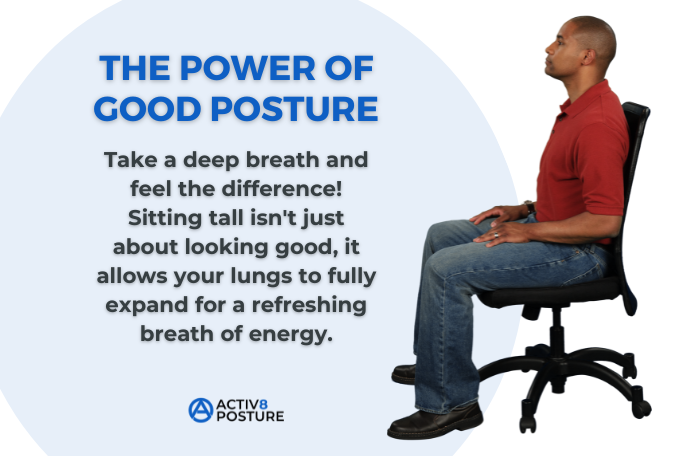
When you sit or stand upright, your ribcage and diaphragm have more room to move, so deep, full breaths come more easily. You can feel the difference for yourself with this quick test.
Do this sitting test for yourself to feel how your diaphragm and breathing can be affected.
- Sit in a slouched posture, letting your back round, and try to take in a deep breath. Pretty tough right?
- Now sit tall in an upright position and breath in while allowing your abdominal muscles to relax.
You should feel how much easier it is to breathe in an extended, better posture!
3. Look Taller and Slimmer:
Sure, good posture isn’t only about good looks, but it creates a more elongated, symmetrical, and balanced body. Standing tall naturally adds inches to your perceived height, while proper alignment prevents your body from slumping forward, creating a leaner appearance.

4. Boosted Energy Levels:
Slouching might seem comfortable initially, but it actually drains your energy! Poor posture forces your muscles to work harder to maintain your body’s position. This constant strain depletes your energy reserves, leaving you feeling fatigued. Good posture allows your muscles to work efficiently, reducing strain and conserving energy, so you feel more energized throughout the day.
5. Relief for Other Body Parts:
Poor posture has a ripple effect throughout your body. Slouching strains your upper back and shoulder muscles, leading to headaches, neck pain, and tension. It can also misalign your hips, causing pain and tightness. Good posture ensures everything is in balance, reducing strain on these areas and promoting overall body comfort.
6. Joint Longevity:
Your joints are designed for smooth, efficient movement. How you stand and move shapes how load is shared across them, and joint strain can be linked to how you load and move — which is why improving posture and spreading load well are part of keeping joints comfortable over the years.
7. Better Balance:
Good alignment and strength give you a steadier base, and balance is very trainable: balance and functional exercise cut the rate of falls by 23% across 116 trials in adults over 60. It matters at every age — for sport, for stairs, and for feeling confident on your feet. Your posture and how you move are where that starts, and the same steady routine supports overall health.

8. Enhanced Core Strength:
Your core muscles — diaphragm, pelvic floor, back, and abdominal muscles — are the foundation of your body. Good posture naturally engages your core, strengthening and stabilizing it. This translates to improved balance, better coordination, and increased overall strength. A strong core is essential for everyday activities like lifting groceries or playing sports, and it can even improve your athletic performance.
9. Better Workout Performance:
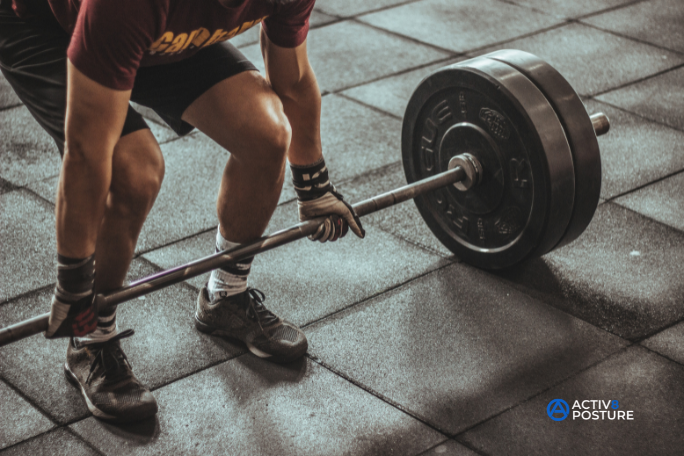
Working out with good posture is like building a house on a solid foundation. Proper alignment ensures your muscles are working correctly and efficiently during exercise. This means you get the most out of your workouts, improve your form, and minimize the risk of injury.
10. Less Jaw and Neck Tension:
Forward head posture often shows up alongside jaw and neck tension, and working on head and neck position is part of the picture for many people with jaw tension and TMJ discomfort. Persistent jaw pain, clicking or locking is worth a dentist’s or doctor’s look.
11. Reduce Headaches:
Tension headaches are often linked to tight neck and upper-back muscles, and easing that tension through better posture and strength helps many people. New, severe or unusual headaches are a reason to see a doctor.
12. Boost Confidence and Mood:
Many people say they feel more confident standing tall, and some research suggests posture can influence how you see yourself. Either way, feeling better in your body is a real and worthwhile reason to do this work.

Two Bonus Benefits of Good Posture
13. Staying Active at Any Age:
Strength and posture keep responding at any age: people averaging 90 years old gained 174% in strength in eight weeks. Good posture and the strength behind it help you keep doing the things you enjoy, for longer.
14. Reduced Stress:
Moving comfortably and breathing easily help many people feel calmer, and releasing tension in the neck and shoulders can take some of the edge off a stressful day.
By incorporating these tips and prioritizing good posture, you’ll unlock a multitude of benefits that extend far beyond just appearances. You’ll experience less pain, move with more ease, and feel more confident and energized throughout your day.
Maintaining Good Posture
The good news? It’s never too late to improve your posture! Here are some practical tips:
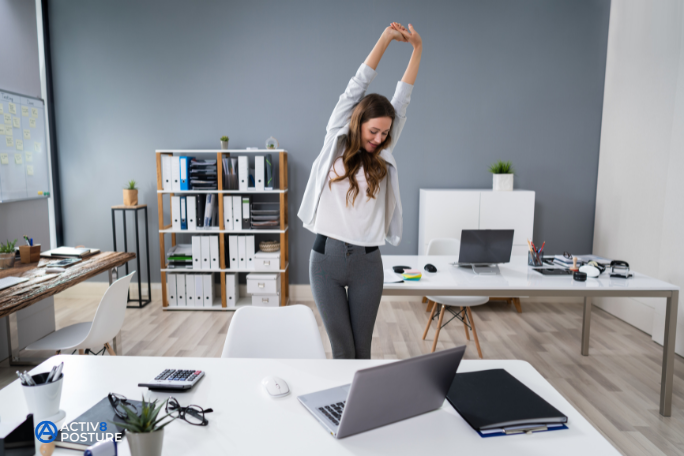
- Be Mindful: Throughout your day, pay attention to your posture. Are you slouching? Adjust your position regularly.
- Move! Regular exercise helps strengthen postural muscles and improves body awareness. Consider posture therapy, yoga, or activities that promote varied movement.
- Breathe Deeply: Practice deep breaths while maintaining good posture. This helps relax your upper body.
- Stand Tall: Imagine yourself standing like a superhero (think Wonder Woman or Superman!). This power pose can boost confidence and improve posture.
- Ergonomic Workspace: If you have a desk job, your sitting posture matters — invest in an ergonomic chair and adjust
Conclusion
The benefits of good posture go well beyond our brief list here. There are many options for you to work on your posture on your own or with a professional. The most important takeaway I hope you get from this is that you are not stuck with bad posture!
You can achieve better posture by implementing some simple changes in your habits and routines. Programs like Activ8 Posture where our focus is individual posture therapy can help get you on the right track to overcome pain or limitations. Beyond that, we also provide guidance to keep you in line as part of your healthy lifestyle in your activities.
We’d love to hear from you and get to know how we can help you achieve the healthy lifestyle you’re looking for.
FAQs on the Benefits of Good Posture
What are the advantages of correct posture?
There are numerous advantages to correct posture, including:
- Reduced pain:Good posture takes pressure off your lumbar and thoracic back, neck, and joints, preventing discomfort and stiffness.
- Easier breathing: Sitting tall gives your ribcage and diaphragm more room to move.
- Enhanced appearance: Standing tall creates a more elongated and leaner silhouette.
- Boosted energy levels:Good posture allows your muscles to work efficiently, reducing fatigue and leaving you feeling more energized.
- Better balance: A steadier base — and balance training cuts the rate of falls by about a quarter.
- Stronger core:Good posture engages and strengthens your core muscles, leading to better balance, coordination, and overall strength.
- Better workout performance:Proper alignment ensures your muscles work correctly during exercise, maximizing your workout and minimizing injury risk.
- Less neck and jaw tension: Many people find tension headaches ease as neck and shoulder tension does.
- Increased confidence: Many people feel more confident standing tall.
Why is good posture important?
Good posture is important for several reasons. It helps maintain the proper alignment of your spine, joints, and muscles, which can prevent pain and injuries. It also helps you breathe more easily and move more comfortably. Additionally, good posture can boost your confidence and mood.
What does good posture do to the brain?
Mostly, it changes how you feel. Moving comfortably, breathing easily and holding yourself upright help many people feel more alert and more confident. Your brain also relies on position sense from your muscles and joints, and keeping them moving well keeps that feedback sharp.
What does good posture increase?
Good posture can increase a variety of things, including:
- Energy levels
- Confidence
- Strength
- Flexibility (through improved alignment)
- Breathing room
- Balance
Is good posture really important?
Yes, good posture is very important for your overall health and well-being. It can significantly impact your physical health by reducing pain, improving mobility, and preventing injuries. It can also positively affect your mental well-being by boosting your confidence and mood. By incorporating good posture habits into your daily life, you’ll unlock a multitude of benefits that will enhance your quality of life.
Can posture therapy help me achieve good posture?
Absolutely! Posture therapy can be a valuable tool for achieving and maintaining good posture. A qualified posture therapist can assess your postural imbalances, identify any underlying muscular weaknesses or tightness, and develop a personalized treatment plan to address these issues. Posture therapy techniques include therapeutic stretching exercises, strengthening exercises, and alignment exercises to help you maintain an upright position and good posture throughout your day. If you’re struggling to improve your posture on your own, posture therapy can provide the guidance and support you need to achieve lasting results.
Sources
- Hayden JA, Ellis J, Ogilvie R, Malmivaara A, van Tulder MW. Exercise therapy for chronic low back pain. Cochrane Database of Systematic Reviews, 2021. 249 trials, 24,486 participants.
- Sherrington C, Fairhall N, Kwok W, et al. Evidence on physical activity and falls prevention for people aged 65+ years. Int J Behav Nutr Phys Act 2020;17:144. doi:10.1186/s12966-020-01041-3
- Fiatarone MA, et al. High-intensity strength training in nonagenarians: effects on skeletal muscle. JAMA, 1990. Ten frail nursing-home residents, mean age 90; nine completed.
Related reading: What Does Posture Help With and How Can I Fix Mine?.
Where to go next
- Browse Posture & Alignment for more on this topic.
- Read how we correct posture.
- Not sure where to start? A free 30-minute consultation and posture assessment, at one of our clinics or virtually, is the best first step.


